


I hope you have been enjoying this series on coping with the pressure of the winter for horse owner. This series is reflective of how I want the website to develop. Helping provide good quality, science backed advice that does work. Owning horses is not cheap but you can make better choices that don’t cost you the earth. If you missed my free check list you can get it here –
Feeding horses in winter is an area that you can do well to pay extra attention to. Whether you’ve got a good doer or a skinny minnie, then this blog is here to help you navigate the winter months more effectively.
I’m going to concentrate on three main areas:
- Type of feed needed
- Bulking out your feed effectively
- Controlling the cost of winter feed
Start with the horse, not the bucket
Feeding horses is both a science and an art. The best place to start is to look at the horse, rugless. To help you can take a photo from both sides, front and back. Keep these and compare them monthly or so.
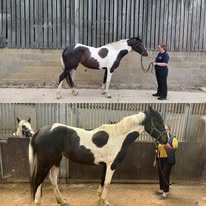
There are a number of very good source of body scoring that you can use to assess your horse’s body condition without weighing them. The British Horse Society has a really good resource on doing this – you can find it HERE. I’d say body scoring is the most reliable unless you have access to a weighbridge on site.
What Feed you will need
Forage is the base of the winter feeding and our biggest cost, so it is particularly important to have a good grip on.
Good doers are a nightmare in summer but a godsend in winter. If your horse is holding their condition well on hay and a heavily chaff based feed alone, then stick to that. Adding in a concentrate feed will only cost you money and give you a problem in the spring.
Conversely if your horse is on the lighter side, then concentrate on checking everything is good with them healthwise first – are their teeth checked and is there a worm issue? Before reaching for that bag of conditioning mix.
For both types, there are plenty of forage based options for either type. Look for low sugar/starch options like chopped straw products for the good doers. For the skinny minnies, look at chaffs with high oil and protein additions.
I went through this live, and you can watch it back here.
How to bulk out your feed effectively
fff This is the practical section people share. Cover chop, soaked fibre feeds and unmolassed beet, safe soaking times and amounts, and how to bulk out a small ration to keep a greedy horse occupied. If you use slow-feed nets, mention them as a way to stretch forage. Keep the scientific “why” short, such as how fibre keeps the gut working and slows eating.
Controlling costs
By nature, we are often a bit guilty of being ‘feeders’ but in this current climate it is vital to savvy with your feeding routine. Start to weigh your feed, weigh your hay nets or the portion of hay or haylage that you are putting out/in your stable. This will enable you to know how much you are using and how this correlates with what your horse actually needs. It also will enable you to work out how much it is costing you.
Along as being feeders, it is easy to try to be blind to just how much you are spending on your horse. There are some cheap wins that will help you save all year round, not just this winter!
- Buy forage well ahead of needing it.
- Buy in bulk, while this might be a bit scary, if you have the space then it will save you a lot.
- Share loads with friends.
- Ensure your feed storage is dry and vermin free to avoid wastage.
- Feed by weight, not by scoop – this will save you far more money than you will realise.
- Drop supplements that are not working or are doubled up.
In addition to cheap wins, there are also false economies to avoid –
- Cheap feed does not always equal good food and you can end up needing to feed more and then end up living in a false economy. That said, do your research, most of the big feed companies have a value line that they sell as own brand feed in feed stores like Mole Valley Stores.
- Feeding hay on the ground in the field – this will trash your grazing and the horses only eat a little before wasting it.
The Adventures in Black and White Feed Calculator
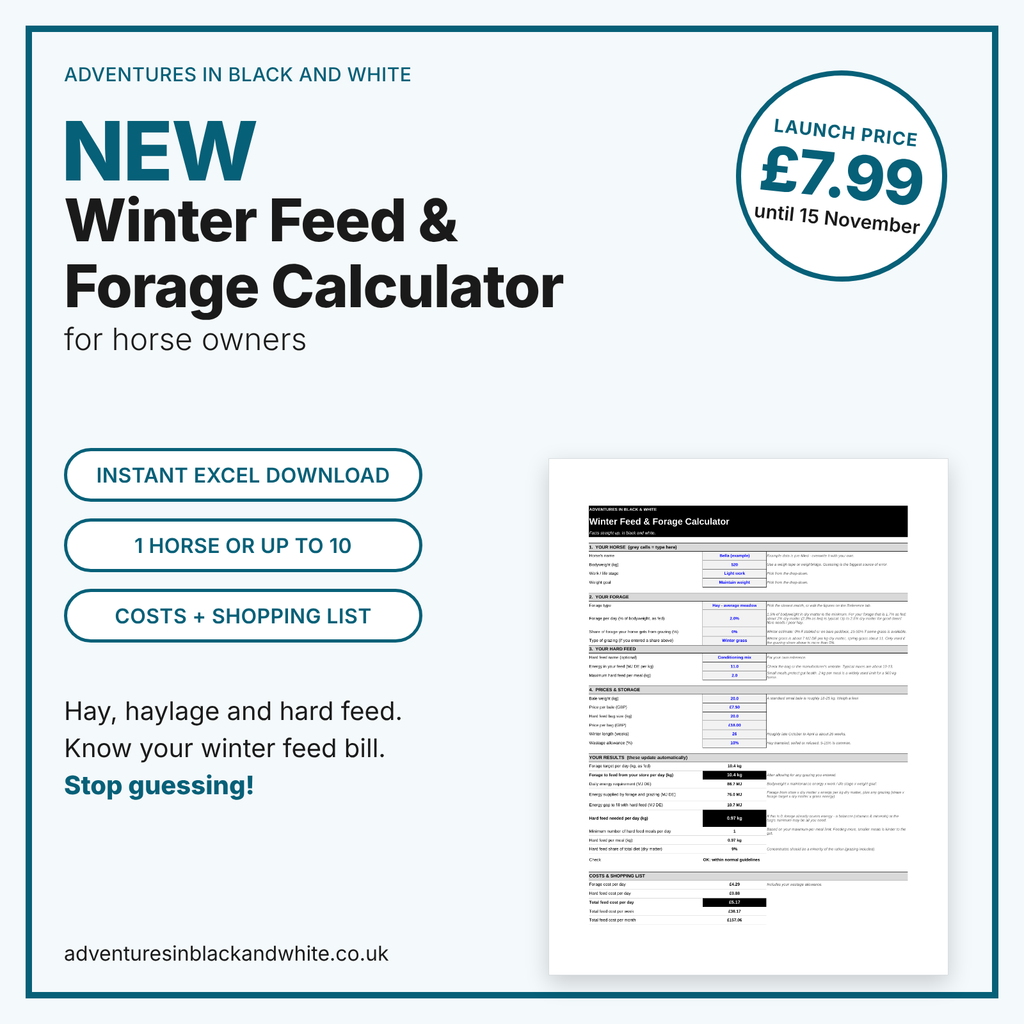
I’ve designed a winter feed calculator to take the guess work out of feeding. This great spreadsheet will work out how much your horse needs on a daily basis and will even give you the cost so you can budget for winter.
← Click image to go to shop
Wrapping it all up
This is the last in this current series, I hope you have enjoyed it and do watch the full Live. You can catch up either on Facebook or on YouTube.
Remember to pick the problems you can control, one from the three areas – one thing that will make it easier on the yard, one thing that will make winter more pleasant for your horse and one thing that will help you. Then you can build from there!
Want more help? Winter Help includes tailored advice on your horse, your land and your routine, a video call of up to an hour each month, and WhatsApp support with replies within 48 hours (£45, or £35 with a First Winter Chat discount). Whole Winter runs from 1st November or 1st December for 3 months (£120).
My advice comes from my experience and equine science qualifications, and it doesn’t replace your vet. For any health concern or emergency, call them first.