

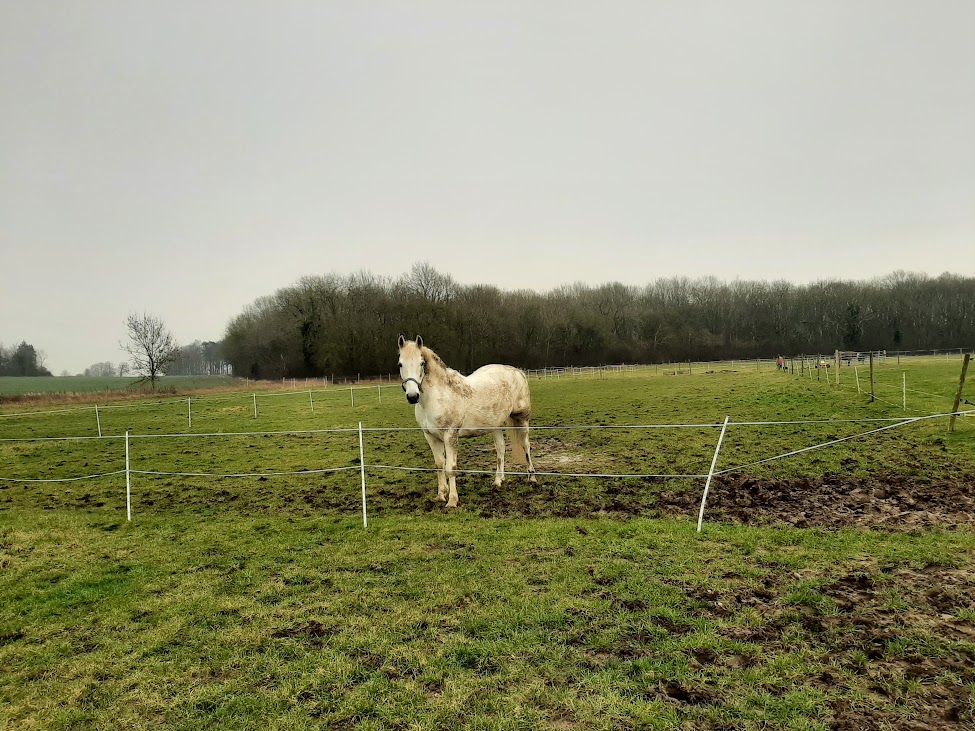
I’ve lived in heavy clay areas for most of my horsey life so I’d like to think I know a bit about how to manage mud and keep horses safe and sound in it over the winter time.
While the Internet would like to us all to live in this horsey utopia of year round 24 hour turn out, this may not be your reality and that is ok. It’s how you manage the situation that you are in that really matters so I am going to try to break it down simply so you can be guilt free.
Accept what you can control
Winter is hard and there are some things that you cannot control especially as a livery client, so try to focus on what you can do. This blog is about what you can do as a livery client and then if you are in charge of your turnout what you can do to make it easier to manage.
Horse owners on livery yards
Firstly if you are on a livery yard, then the field management of winter turn out may be completely out of your hands. When looking at yards, this is something to consider. However it is not as black and white just picking the yard that advertised all winter turn out, because the standard of that turn out may actually be more detrimental to your horse. Especially if you want to compete.
Here are some scenarios and their pros and cons
| Turn Out Available | Pros | Cons | Ideal for |
| 24 hour turn out | Good for horses minds and bodies. The most natural. | Depending on management the risks of poor access to shelter and food supplied can be an issue. Harder to spot and deal with injuries. | Groups of horses not in work over winter. Best practice is to have certain winter fields that are rested all summer to allow this heavy use over the winter. |
| 50/50 turn out depending on weather | What is most frequently offered. Good if no reliable shelter in fields or poorer grazing. Also horses get dry, can be checked for injuries and treated. Easier to manage weight | Gateways to fields will get deep from heavy use. Horses can get more upset and injury themselves when it is getting close to coming-in time. More expensive with cost of extra bedding. | This suits most livery yard clients. It is vital to have some sort of safe exercise for the horses when they cannot go outside. Ideally a play pen on a surface but often this is access to a horse walker or exercise in the arena. |
| No turn out in winter | Horse stay clean Injuries from mud are minimal and linked only to exercise out hacking | More expensive to feed and bed Horses miss horse to horse contact, mental and physical can be detrimental to the horse Need to be very dedicated to providing stimulation for the horse to cope. | This can work if the horse has two areas to use. for example a pen during the day where they touch other horses, move around and socialise, then stable over night. |
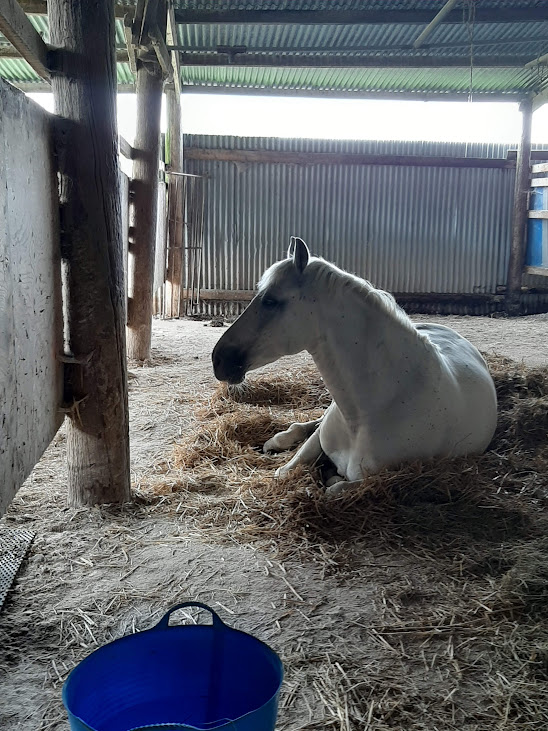
In general, this will get easier the more winters you go through, so this one is a learning curve. What suits you, will not suit everyone. Running a livery yard is hard so rather than asking a livery yard owner to change their routine, it may be easier to find a yard that better suits your needs.
Managing your own paddocks
Pasture management is a skill that I studied at university and then put into practice when managing stud farms. I also was fortunate at times to have my own fields for my own horses so I’m aware of the issues facing all levels of horse ownership.
Excessive mud is caused by these main factors:
- Type of land
- Traffic over that land, especially gateways and paths
- Horse density
Type of land
In terms of wintertime, the easiest land to manage is sandy soil. that has it’s own issues but that is a summer problem mostly. Clay is common across the country and you cannot control the land type. So you need to work with it. Focusing on good drainage, light use and improved sward will help.
Traffic
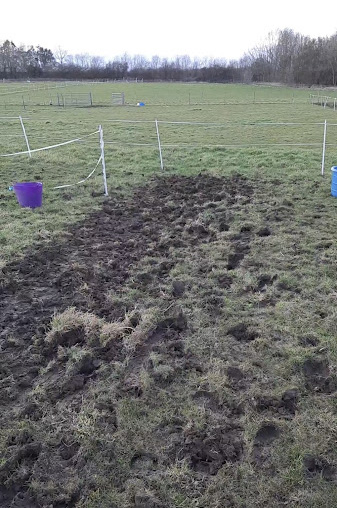
For clay type soils, your main areas of issues will be gateways and frequently used pathways. Deep going not only ruins the grass growth in that area but will pull off shoes and damage leg structures. Ways of dealing with this problem include
- Putting down a matt of bedding or straw – do not so this, it works for a few days but then the mud will become even deeper.
- Utilising slip rails or additional electric fence gates – moving the gateway will help spread the pressure on one area. It is a cheap fix and you will trash more of your field but that can be rectified easier than the above option.
- Mud mats – these are becoming more popular and are a good way to manage a permanent gateway for winter use. They are expensive but are low maintenance.
- Hardcore – this is expensive and tends to move the mud issue out into the field more but it does make gateways safer. There is nothing worse than getting caught in a gateway sucked into deep mud while the horses are fighting around you as they are trying to get in.
Horse Density
By far the biggest cause of excessive mud is having too many horses on a small piece of land. Horse hooves are awful for carving up the grass sward and ruining good pasture. WHW recommend minimum 1 acre per horse with additional supplementary feed and good pasture management whereas the BHS and Redwings recommend 1.5 to 2 acres for all year round grazing. This surprised me when I looked it up as I was always taught 2 acres for the first horse then 1 acre for each additional horse.
Whichever way you look at it the modern way of individual grazing in small squares is definitely not enough and in winter it is even more of a problem.
Paddock Management
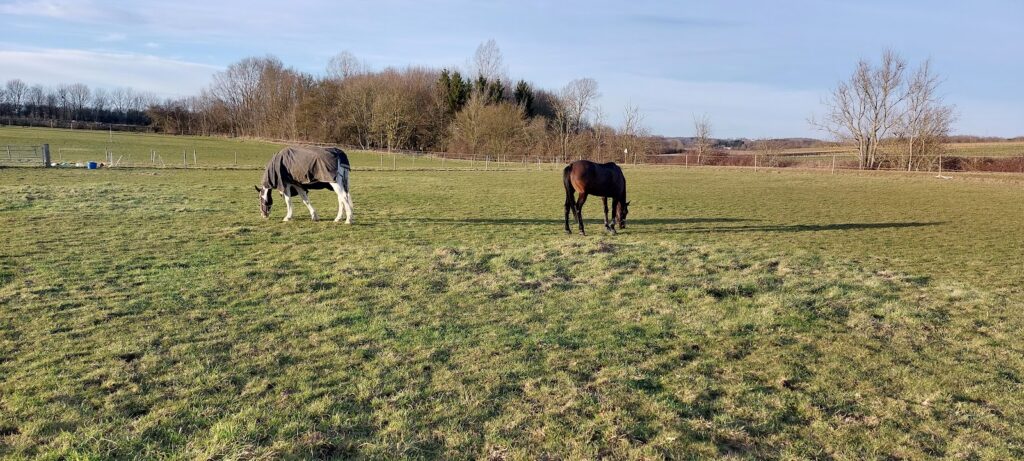
In my opinion the biggest downfall of most yards is poor paddock management. You can easily have 3 horses on 3 acres if you are on top of your management. And by management I don’t just mean pulling ragwort, poo picking and the odd bit of fertiliser.
Proper paddock management requires tools. It is amazing the difference that is made by chain harrowing, rolling and top treating a field will make. It helps manage the sward at a good level and make the field safer for the horses.
I’ve put together a simple sheet outlining the yearly maintenance required for any field that you can download here.
Want more help?
Every yard and every field is different, and what works on free-draining land won’t work on heavy clay. If you’d like advice built around your own set-up, I can help.
Winter Help (£45) gives you tailored advice on your horse, your land and your routine, a video call of up to an hour each month, and WhatsApp support with replies within 48 hours. Not sure where to start? A 15 minute First Winter Chat is £10, and you’ll get a £10 discount on either winter package if you sign up within 7 days of your call.
My advice comes from my experience and equine science qualifications, and it doesn’t replace your vet. For any health concern or emergency, call them first.
Email ria@adventuresinblackandwhite.co.uk or use the booking form on the front page.
Next in the series: feeding during the winter months, including keeping the weight on (or off) and a handy calculator so you can work out how much feed you need and how much that will cost.