Clipping: Everything you were afraid to ask

I’m on a roll at the moment, and enjoying sharing all my useful knowledge with you. Hopefully you’ve checked out my handy winter prep sheets and headed over to YouTube for the tutorials on there.

Today, I want to focus on clipping. I’ve been doing a little series on YouTube and thought that it would be a great winter topic for the blog , so here we are.

Getting the basics right

The first time I clipped a horse from start to finish at work, I was handed a set of clippers and told to crack on. I had clipped horses before so was confident in that respect. What I hadn’t ever done was set the clippers up. Someone had always done that, then let me have a go. It’s something that you can read about but unless you actually have watched someone do it and taken note of what they do then it can be daunting.

I was worried that I had put the clippers together wrong, that I had over tightened the blades, was I even putting the oil in the right holes. All of these questions are answered in this video that I have made to make clipping a horse for the first time on your own much easier and less stressful.

Which clip is best for a beginner?

Clipping over time has become less stuffy than it was back when I started clipping horses. People are now much more happy to do a clip that suits there horse, rather than follow fashion. And I am all in favour of this, just because sometimes doing something that does not feature in the usual clipping lines actually is really good for your horse. You should base the clip you want to do on the following 3 factors:

  • Level of work the horse is in
  • Body condition of the horse
  • Environment the horse is kept in

Giving a horse that lives out 24/7 with no shelter that does not keep weight on well and is only going for hacks at the weekend a full clip because it looks cool is not in the best interest of that horse’s welfare.

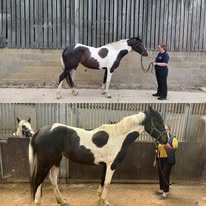
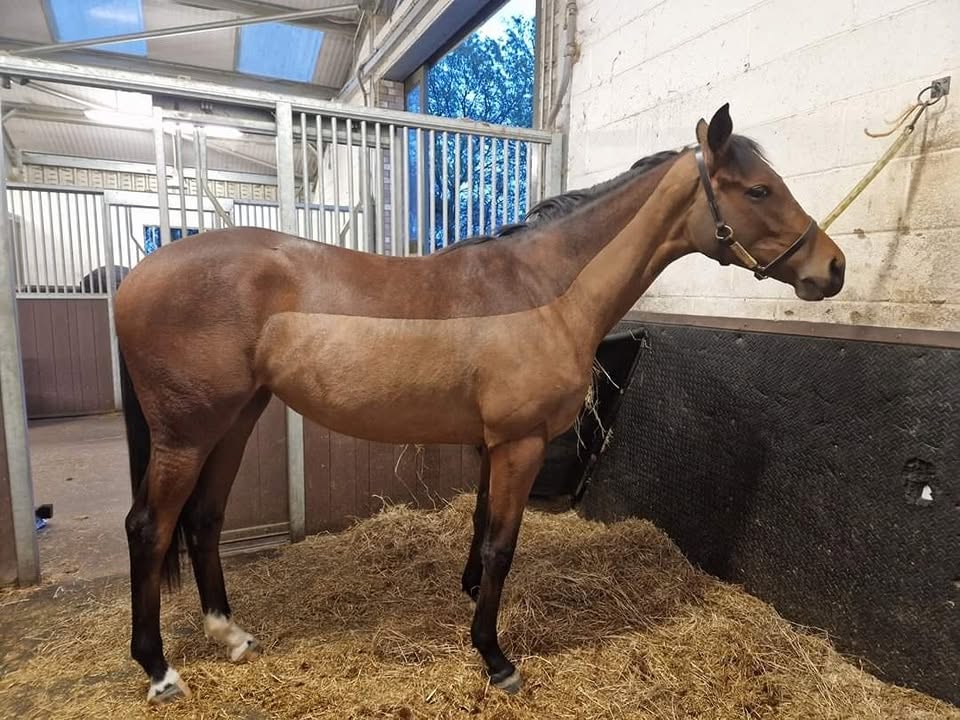
I have at time also adapted traditional clips to a look that is better for that horse, especially with young Thoroughbreds. The rise of the yearling clip which enables you to clip most of the hair off without risking getting kicked in the head and leaves enough hair on to help riders on those fresh winter mornings is actually a great idea (see below)
Keep it simple!

When attempting to clip for the first time I have two clips that I would recommend – either a trace type clip or a hunter. These are relative easy and don’t take too much time. The trace is a bit harder as you will have to do lines but you start from in front of your horse’s stifle or even their girth area and draw a line up to their ears. If you don’t get it even both sides, it won’t show too much. Even easier is to do a hunter clip if your horse is good to clip and in full work. Clipping all the hair off in one go is much easier than fiddling about with lines!

Clippings tips that no one ever tells you

Clipping is something that really does just take lots of practice, getting it wrong, getting hair in places you don’t want to and thinking ‘oh well, it will grow out’. If you keep in mind the difference between a good clip and bad one is just two weeks, then you will be half way there.

I do have some tips that I wished I’d been told sooner:

  • Wash your horse before – a clean coat is easier on the blades and gives a smoother finish.
  • Wear overalls – Future you will thank you when you’re not finding hair in your underwear for weeks afterwards.
  • Have multiple sets of blades – swapping hot blades for cool ones makes the whole job quicker.
  • and use baby wipes – they are brilliant for getting clipped hair off your horse, your hands and your face.

In this video, I show you why:

https://youtu.be/lOEQeEuQvcw

Not sure which clip suits your horse or want a second pair of eyes?

Every horse is different, and it can be hard to know which clip to choose or how to get through winter without it all feeling overwhelming. If you’d like some personal advice, you can book a £10 call with me to talk through your horse, their workload and what they need this winter. I also offer consultations on horse care, rehabilitation and retraining, breeding and foaling, and confidence.

Come and join me live on Wednesday

I’m going live on Facebook on Wednesday 18 November at 7pm, and I’d love you to join me. Bring your questions and I’ll answer as many as I can.

More help for your winter

  • Grab my free winter prep sheets if you haven’t already: Here
  • My book, The Simple Guide to Horse Care, covers everyday care in one place: https://amzn.eu/d/0eEQvdbR

I hope you’ve enjoyed this blog, which brings together the work behind the YouTube series. If you’d like to see more tutorials like these, let me know in the comments or send me a message. And if you’ve found it useful, please subscribe and give the videos a like, as it really does help me.

Happy clipping!
Feeding Horses in Winter: Better Choices That Don’t Cost the Earth

I hope you have been enjoying this series on coping with the pressure of the winter for horse owner. This series is reflective of how I want the website to develop. Helping provide good quality, science backed advice that does work. Owning horses is not cheap but you can make better choices that don’t cost you the earth. If you missed my free check list you can get it here –

Feeding horses in winter is an area that you can do well to pay extra attention to. Whether you’ve got a good doer or a skinny minnie, then this blog is here to help you navigate the winter months more effectively.

I’m going to concentrate on three main areas:

  • Type of feed needed
  • Bulking out your feed effectively
  • Controlling the cost of winter feed

Start with the horse, not the bucket

Feeding horses is both a science and an art. The best place to start is to look at the horse, rugless. To help you can take a photo from both sides, front and back. Keep these and compare them monthly or so.

There are a number of very good source of body scoring that you can use to assess your horse’s body condition without weighing them. The British Horse Society has a really good resource on doing this – you can find it HERE. I’d say body scoring is the most reliable unless you have access to a weighbridge on site.

What Feed you will need

Forage is the base of the winter feeding and our biggest cost, so it is particularly important to have a good grip on.

Good doers are a nightmare in summer but a godsend in winter. If your horse is holding their condition well on hay and a heavily chaff based feed alone, then stick to that. Adding in a concentrate feed will only cost you money and give you a problem in the spring.

Conversely if your horse is on the lighter side, then concentrate on checking everything is good with them healthwise first – are their teeth checked and is there a worm issue? Before reaching for that bag of conditioning mix.

For both types, there are plenty of forage based options for either type. Look for low sugar/starch options like chopped straw products for the good doers. For the skinny minnies, look at chaffs with high oil and protein additions.

I went through this live, and you can watch it back here.

How to bulk out your feed effectively

fff This is the practical section people share. Cover chop, soaked fibre feeds and unmolassed beet, safe soaking times and amounts, and how to bulk out a small ration to keep a greedy horse occupied. If you use slow-feed nets, mention them as a way to stretch forage. Keep the scientific “why” short, such as how fibre keeps the gut working and slows eating.

Controlling costs

By nature, we are often a bit guilty of being ‘feeders’ but in this current climate it is vital to savvy with your feeding routine. Start to weigh your feed, weigh your hay nets or the portion of hay or haylage that you are putting out/in your stable. This will enable you to know how much you are using and how this correlates with what your horse actually needs. It also will enable you to work out how much it is costing you.

Along as being feeders, it is easy to try to be blind to just how much you are spending on your horse. There are some cheap wins that will help you save all year round, not just this winter!

  • Buy forage well ahead of needing it.
  • Buy in bulk, while this might be a bit scary, if you have the space then it will save you a lot.
  • Share loads with friends.
  • Ensure your feed storage is dry and vermin free to avoid wastage.
  • Feed by weight, not by scoop – this will save you far more money than you will realise.
  • Drop supplements that are not working or are doubled up.

In addition to cheap wins, there are also false economies to avoid –

  • Cheap feed does not always equal good food and you can end up needing to feed more and then end up living in a false economy. That said, do your research, most of the big feed companies have a value line that they sell as own brand feed in feed stores like Mole Valley Stores.
  • Feeding hay on the ground in the field – this will trash your grazing and the horses only eat a little before wasting it.

The Adventures in Black and White Feed Calculator

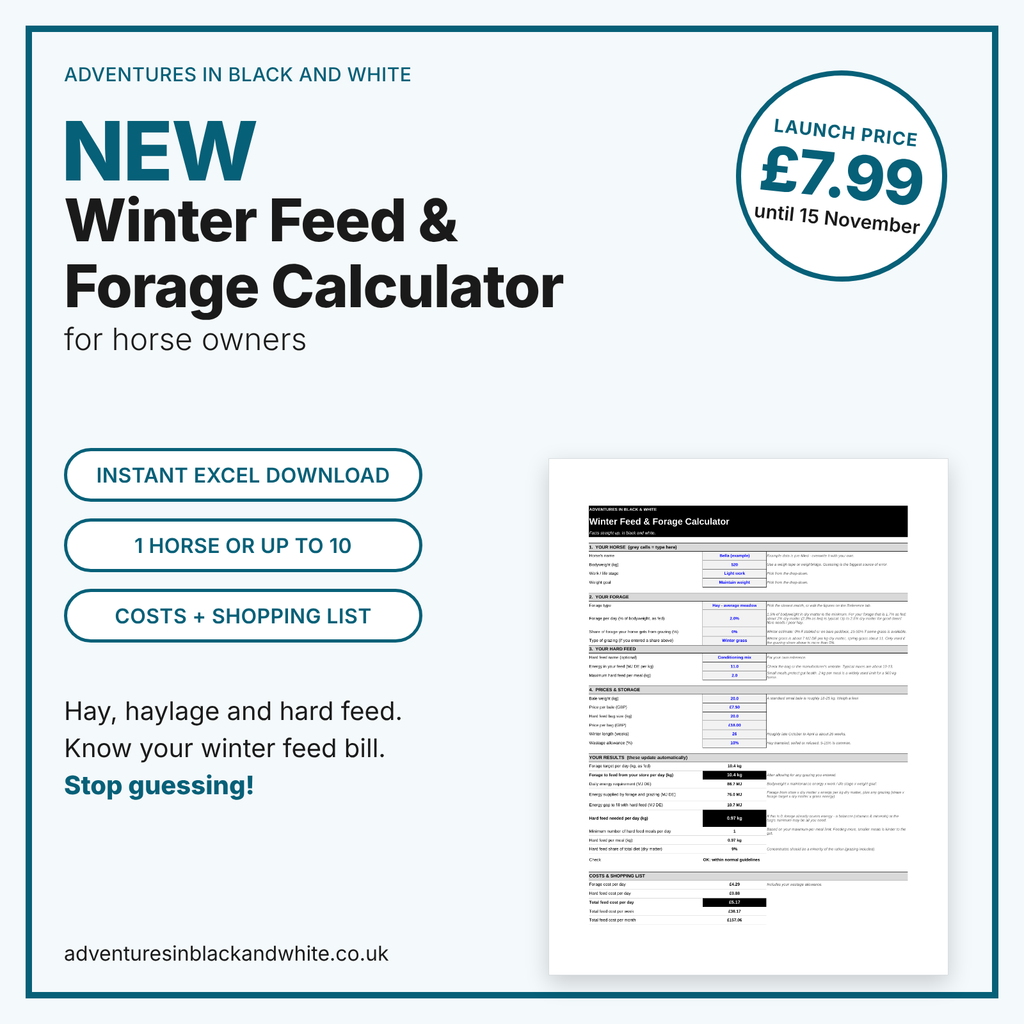
I’ve designed a winter feed calculator to take the guess work out of feeding. This great spreadsheet will work out how much your horse needs on a daily basis and will even give you the cost so you can budget for winter.

← Click image to go to shop

Wrapping it all up

This is the last in this current series, I hope you have enjoyed it and do watch the full Live. You can catch up either on Facebook or on YouTube.

Remember to pick the problems you can control, one from the three areas – one thing that will make it easier on the yard, one thing that will make winter more pleasant for your horse and one thing that will help you. Then you can build from there!

Want more help? Winter Help includes tailored advice on your horse, your land and your routine, a video call of up to an hour each month, and WhatsApp support with replies within 48 hours (£45, or £35 with a First Winter Chat discount). Whole Winter runs from 1st November or 1st December for 3 months (£120).

Your enquiry could not be saved. Please try again.
Thanks, your enquiry has been sent. I’ll reply within 2 working days, and I’ve emailed you a confirmation. If you can’t see it, check your junk folder. If your horse is ill or injured, please call your vet first.

Help Form

Tell me a little about you and your horse and I’ll come back to you within 2 working days.

We work with Brevo to collect your data and send you our communications. As part of this, Brevo acts under our responsibility and our instructions — we remain responsible for how your data is used for this purpose. Brevo may also, on its own side, use some of this data to help keep the platform secure (for example, to spot attempted fraud or hacking) — to find out more about this part, see Brevo's Privacy Policy.

My advice comes from my experience and equine science qualifications, and it doesn’t replace your vet. For any health concern or emergency, call them first.

Mud Management for Horses

I’ve lived in heavy clay areas for most of my horsey life so I’d like to think I know a bit about how to manage mud and keep horses safe and sound in it over the winter time.

While the Internet would like to us all to live in this horsey utopia of year round 24 hour turn out, this may not be your reality and that is ok. It’s how you manage the situation that you are in that really matters so I am going to try to break it down simply so you can be guilt free.

Accept what you can control

Winter is hard and there are some things that you cannot control especially as a livery client, so try to focus on what you can do. This blog is about what you can do as a livery client and then if you are in charge of your turnout what you can do to make it easier to manage.

Horse owners on livery yards

Firstly if you are on a livery yard, then the field management of winter turn out may be completely out of your hands. When looking at yards, this is something to consider. However it is not as black and white just picking the yard that advertised all winter turn out, because the standard of that turn out may actually be more detrimental to your horse. Especially if you want to compete.

Here are some scenarios and their pros and cons

Turn Out AvailableProsConsIdeal for
24 hour turn outGood for horses minds and bodies.

The most natural.
Depending on management the risks of poor access to shelter and food supplied can be an issue.

Harder to spot and deal with injuries.
Groups of horses not in work over winter.

Best practice is to have certain winter fields that are rested all summer to allow this heavy use over the winter.
50/50 turn out depending on weatherWhat is most frequently offered.

Good if no reliable shelter in fields or poorer grazing.

Also horses get dry, can be checked for injuries and treated.

Easier to manage weight
Gateways to fields will get deep from heavy use.

Horses can get more upset and injury themselves when it is getting close to coming-in time.

More expensive with cost of extra bedding.
This suits most livery yard clients.

It is vital to have some sort of safe exercise for the horses when they cannot go outside. Ideally a play pen on a surface but often this is access to a horse walker or exercise in the arena.
No turn out in winterHorse stay clean
Injuries from mud are minimal and linked only to exercise out hacking
More expensive to feed and bed
Horses miss horse to horse contact, mental and physical can be detrimental to the horse
Need to be very dedicated to providing stimulation for the horse to cope.
This can work if the horse has two areas to use. for example a pen during the day where they touch other horses, move around and socialise, then stable over night.

In general, this will get easier the more winters you go through, so this one is a learning curve. What suits you, will not suit everyone. Running a livery yard is hard so rather than asking a livery yard owner to change their routine, it may be easier to find a yard that better suits your needs.

Managing your own paddocks

Pasture management is a skill that I studied at university and then put into practice when managing stud farms. I also was fortunate at times to have my own fields for my own horses so I’m aware of the issues facing all levels of horse ownership.

Excessive mud is caused by these main factors:

  • Type of land
  • Traffic over that land, especially gateways and paths
  • Horse density

Type of land

In terms of wintertime, the easiest land to manage is sandy soil. that has it’s own issues but that is a summer problem mostly. Clay is common across the country and you cannot control the land type. So you need to work with it. Focusing on good drainage, light use and improved sward will help.

Traffic

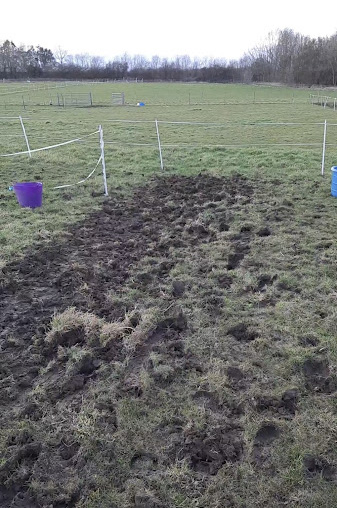
For clay type soils, your main areas of issues will be gateways and frequently used pathways. Deep going not only ruins the grass growth in that area but will pull off shoes and damage leg structures. Ways of dealing with this problem include

  • Putting down a matt of bedding or straw – do not so this, it works for a few days but then the mud will become even deeper.
  • Utilising slip rails or additional electric fence gates – moving the gateway will help spread the pressure on one area. It is a cheap fix and you will trash more of your field but that can be rectified easier than the above option.
  • Mud mats – these are becoming more popular and are a good way to manage a permanent gateway for winter use. They are expensive but are low maintenance.
  • Hardcore – this is expensive and tends to move the mud issue out into the field more but it does make gateways safer. There is nothing worse than getting caught in a gateway sucked into deep mud while the horses are fighting around you as they are trying to get in.

Horse Density

By far the biggest cause of excessive mud is having too many horses on a small piece of land. Horse hooves are awful for carving up the grass sward and ruining good pasture. WHW recommend minimum 1 acre per horse with additional supplementary feed and good pasture management whereas the BHS and Redwings recommend 1.5 to 2 acres for all year round grazing. This surprised me when I looked it up as I was always taught 2 acres for the first horse then 1 acre for each additional horse.

Whichever way you look at it the modern way of individual grazing in small squares is definitely not enough and in winter it is even more of a problem.

Paddock Management

In my opinion the biggest downfall of most yards is poor paddock management. You can easily have 3 horses on 3 acres if you are on top of your management. And by management I don’t just mean pulling ragwort, poo picking and the odd bit of fertiliser.

Proper paddock management requires tools. It is amazing the difference that is made by chain harrowing, rolling and top treating a field will make. It helps manage the sward at a good level and make the field safer for the horses.

I’ve put together a simple sheet outlining the yearly maintenance required for any field that you can download here.

Want more help?

Every yard and every field is different, and what works on free-draining land won’t work on heavy clay. If you’d like advice built around your own set-up, I can help.

Winter Help (£45) gives you tailored advice on your horse, your land and your routine, a video call of up to an hour each month, and WhatsApp support with replies within 48 hours. Not sure where to start? A 15 minute First Winter Chat is £10, and you’ll get a £10 discount on either winter package if you sign up within 7 days of your call.

My advice comes from my experience and equine science qualifications, and it doesn’t replace your vet. For any health concern or emergency, call them first.

Email ria@adventuresinblackandwhite.co.uk or use the booking form on the front page.

Next in the series: feeding during the winter months, including keeping the weight on (or off) and a handy calculator so you can work out how much feed you need and how much that will cost.

First Winter Essentials

So you bought your horse in the spring or summer and had a great time over summer with the glorious hot weather. But now it’s definitely getting that bit colder. You might have seen my blog from last week and downloaded my check list – if you haven’t go back and have a look.

I’ve put together this help blog for you to understand what are your first winter essentials. I have made all the mistakes so you don’t have to. I really want to help you also so I’ve produced another freebie for you to download for free, no email sign up needed. Click the link below

Winter Essentials for the Owner

While your horse is the most important, making your life as easy as possible is essential for winter survival. First thing is you need give yourself a break! Don’t worry if you look like a homeless person for most of the time as function over fashion will definitely become your main aim!

My top five items for winter survival for you are:

  • Head Torch – my go to would be one that is rechargeable, most come with a handy USB charger that you plug in your car to charge on the way too and from the yard. This one is good starting point.
  • Gloves – you can never have too many. I recommend getting a pack of these work gloves and keeping your nice riding gloves for riding/lungeing.
  • Hat- this quite personal, I prefer a beanie and have a few different ones for the different temperatures and also so if one gets wet then you have a spare while the other dries.
  • Waterproof coat – these have been the bane of my life over the last 20 years. I could never afford a big expensive coat but to be fair I don’t think that was a problem. If you like the Dry Robe or Equi Dry type coat – I’d recommend this for those on a budget. However, I mostly used ski coats like these – they fit well and don’t make you sweat!
  • Waterproof footwear – Again it’s best to have a selection, wellies are very much buy as expensive as you can or buy cheap and know you will have to replace them in a year. I also like to have a pair of short waterproof boots and love these boots.

I’ve added on links to products I’ve used. It’s purely personal taste but after working outside for work and having my own horses for 20 plus winters I feel I’ve got a good handle what works and what doesn’t!

Another tip is to keep all your gear together either in a bag or box in the car or at the yard, somewhere dry.

Winter Essential for your Horse

Next up, your horse. This is a little bit easier to get right in my opinion. Once you learn what your horse likes. For the most part mine have all been a bit soft in the winter and not been keen on the rain but also been quite ‘hot’ so don’t require heavy rugging. Even when clipped.

My top five essentials for your horse in winter are:

  • Waterproofed winter ready rugs – I’ve talked about rugs in other blogs, but now it is an essential time to make sure you have your turn out rugs ready, if you haven’t already. I try to start the season with either freshly washed and waterproofed rugs or a new one.
  • Exercise sheet – Essential if you are intending to ride during the winter time. I’ve always had a few but it you can only have one then I highly recommend trying to find an original Witney Wool Newmarket blanket – I’ve even written a blog about how amazing and versatile these rugs are. You can read that here.
  • Mud busting brush – this is essential for getting mud off those difficult places. Most horses tolerate it well and it’s great brush to have in your grooming kit.
  • Stable ball – I love these for any horse, especially when they are spending a bit more time in their stable over the winter time.
  • Towels – these are just your bog basic towel, but very useful for drying legs or faces when de mudding! Buy in bulk on line so you never run out of clean ones.

Winter Essentials for the Yard

Depending on whether you are on DIY, Full livery or at your own yard will have an influence on what you need for your first winter and these are a little more general than the prior two lists. I will go into more detail in the next few weeks or months. In general if you have the following five areas covered, you will be fine!

  • Enough forage for the winter or a plan on how to secure this.
  • A safe area that is covered and well lit for farrier work, grooming and taking up. Don’t panic if you don’t have this but try to make the best of what you have.
  • Stable or field mucking out tools that work best for you. I like to muck out using a specific fork, try a few if you can and then buy the one that works best for you.
  • Water supply – is this well lagged, just in case it gets cold.
  • Consider what you options are for exercise during the winter, some people do give their horses the winter off. Which is a solid plan if you don’t have the luxury of a flood lit arena, horse walker and safe, dry off road hacking.

Don’t be afraid to ask for help

Most first-time owners tell me the hardest part of winter isn’t any one job. Mostly it is the not knowing. Forums and Facebook groups are full of well-meaning tips that are contradictory and often contain factually wrong/harmful advice.

On this website there is a wealth of straight forward black and white advice that is backed from my experience as a horse owner and also running professional yards. So please do search on here for advice or over on YouTube for informative Vlogs.

In addition I offer the First Winter Chat: a 15 minute video call for £10. We’ll go through your set-up, your horse, your worries and your top priorities, so you leave knowing exactly where to start. No jargon and no judgement, just a straight-talking plan.

And if you’d like ongoing support afterwards, sign up to either of my winter packages within 7 days of your call and you’ll get a £10 discount.

  • Winter Help (£45): advice tailored to you, a video call of up to an hour each month, and WhatsApp support with replies within 48 hours.
  • Whole Winter (£120): three months of Winter Help, from 1st November to the end of January or 1st December to the end of February.

Book your First Winter Chat or email ria@adventuresinblackandwhite.co.uk.

Want the all-year basics?

The Simple Guide to Horse Care covers the day-to-day essentials in one place. It’s on Amazon: https://amzn.eu/d/09T60QcP

Next in the series

Next up is Mud Management, a must read blog for those on clay based soils. If you’d like the posts as they come out, sign up in the form at the bottom of this page.

In the meanwhile don’t forget your freebie.

My advice is based on my experience and equine science qualifications. It doesn’t replace your vet. For any health concern or emergency, call them first.

Prepping for Winter

It’s that time of year again where the nights are drawing in. And in a few weeks time the clocks will be changing (Sunday 25th October). So I am going to be putting out some helpful blogs to help you prepare for what comes next.

There will be something for all levels of experience from the first time horse owner facing their first winter to the prepping your broodmare if you are expecting a foal next year or want to get her in foal.

Don’t Panic!

Being prepared for winter gives you vital breathing space as the weather turns. It’s looking like it is going to be a wet one. Which is going to make it hard depending on your soil. I am quite glad to be horseless in one again this year as I am on heavy clay!

Before we start you would do well to read my previous winter blog which focuses on care of yourself which is vitally important. Or visit my YouTube Channel Tutorials – this one is focusing on care and exercise.

Where to Start

You don’t need to do everything at once. The best place to start is by walking around your yard with your Notes app or pen and paper asking yourself the following:

  • Lights: Do you need to think about getting extra lighting in for the winter. Are all the lights working and where is that head torch that you had last year…..
  • Stabling: If your horse is coming in for the winter are living out all summer, do you have your bedding sorted, is your stable clean ready for use.
  • Feed and Forage: Talking about bedding for winter, do you have a plan for the feed you will need and how you will get it. Have you got access to the forage you need. The hot summer has affected the supplies of hay and haylage so if you have to buy it in, then make sure your supplier can accomodate you.
  • Grazing: Think about how much grass you need over winter and whether you have that. Are you going to rest some or do you rotate to rest it fully. What about access, is it going to get super muddy?
  • Shelter: If your horses live out, is their shelter up to the winter months or do you need to do some DIY.
  • Rugs and kit: Hopefully you will have washed your rugs and bought any new ones needed in the spring sales. If not check now that you have everything all clean and ready to go. Also check the fit and condition of the clips and buckles.
  • Health Checks: Think about your farrier schedule, worming tests, routine dental work and general health check on weight and condition.

What’s coming up in the series

Over the next few weeks, I will be covering:

  • First Winter Essentials: a practical no nonsense ‘black and white’ guide for first time horse owners.
  • Mud Management: how to keep leg and feet healthy and your land in the best shape that you can during the winter months
  • Feeding during the Winter Months: essential advice on how to keep the weight on or off in the winter months, forage types and handy tips for saving time.
  • Prepping the broodmare: whether you are expecting a foal or looking to get your mare in foal, this will be a helpful blog to keep bookmarked.

If there is anything else that you’d like me to cover to be prepared for winter, then let me know. Either drop me a message on here or via my socials.

Ditch the Thermometer: The Science of Rugging and Why Light (Not Cold) Controls the Coat

If you walk onto any livery yard in late September, you will inevitably hear the same ritual debate.

“It dropped to 8 degrees last night, so I put him in a 200g medium-weight.”

“I’m clipping early because his winter coat is coming in fast, it must be because of this chilly autumn rain!”

It is one of the most enduring myths in the equestrian world: the belief that dropping temperatures trigger hair growth, and heavy rugging keeps a coat thin.

Having spent over a decade working on Thoroughbred studs in Newmarket, foaling down hundreds of mares and preparing stock for elite sales, I’ve seen firsthand how high-level equine physiology actually works. When you need a mare cycling in February or a yearling showing a summer-slick coat in the dead of winter, you don’t reach for another turnout rug. You reach for the light switch.

Let’s strip away the yard folklore and look at the science in black and white.

The Big Myth: Cold Weather vs. Photoperiod

Your horse does not grow a winter coat because their skin feels a chill. Hair growth is governed almost entirely by photoperiod, the length of daylight in a 24-hour cycle.

Daylight regulates melatonin and hormonal cascades. Source: VectorMine / Getty Images

Here is what is actually happening inside your horse’s body as autumn approaches:

  1. Light Enters the Eye: Receptors in the horse’s retina detect decreasing hours of daylight as the days shorten after the summer solstice.
  2. The Pineal Gland Responds: This signal is transmitted to the pineal gland in the brain. Less light means the pineal gland increases its production of melatonin (the “darkness hormone”).
  3. The Pituitary Cascade: High levels of melatonin suppress the hypothalamus and pituitary gland, altering the release of key hormones like prolactin, the primary hormone responsible for coat shedding and hair follicle activation.
  4. Follicle Shift: Lower prolactin levels signal the hair follicles to shift into their growth phase (anagen), producing the thick, dense undercoat we recognize as winter hair.

Rugging a horse in five layers when the temperature drops will keep their body warm, but it will not stop the hormonal cascade triggered by their eyes. If light levels are dropping, the coat is coming.

What Breeding Studs Learned Decades Ago

If you want proof that light trumps temperature, look at the Thoroughbred breeding industry.

Equine reproduction is seasonal. Mares are long-day seasonal polyestrous breeders, meaning they naturally go into anoestrus (a reproductive shutdown) during the short, dark days of winter. In the wild, this ensures foals are born in warm spring weather when grass is lush.

However, in the racing world, every Thoroughbred officially turns a year older on January 1st. To produce early-born foals that have a competitive edge at the sales and on the track, studs need mares to wake up from anoestrus and start cycling by February.

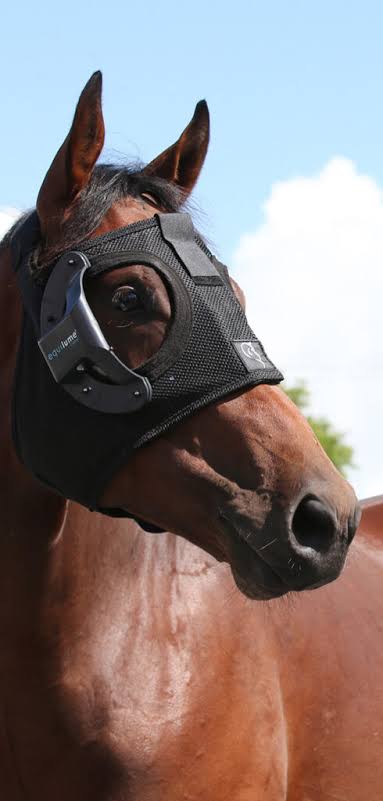
How do we break nature’s seasonal clock? Artificial lighting regimes either with stable lights or a system like EquiLume.

Light masks extend daily photoperiod. Source: Equilume

The Protocol: How to Trick the Pituitary Gland

By extending daily light exposure to 16 hours, we suppress melatonin production, tricking the pituitary gland into believing it is June.

The result? The mare’s hormonal system fires up, ovaries wake up, and as an added biological byproduct, the winter coat sheds out to reveal a shiny, short summer coat, even if it is -2°C outside in Newmarket!

If you want to use photoperiod science to manage your own horse’s coat condition over winter, here is the exact protocol used in elite barns:

1. The Light Intensity (Wattage)

A dim 40W bulb in the corner of a barn won’t cut it. The light must be strong enough at the horse’s eye level to register as daylight.

  • Target light intensity: 100 to 150 lux at eye level.
  • Practical rule of thumb: If you stand in the stable and cannot easily read a newspaper in every corner, it is not bright enough.
  • Standard setups usually require a 100W incandescent bulb or a bright, high-lumens LED fixture mounted safely above the stable.

2. The Daily Schedule (16 Hours Bright / 8 Hours Dark)

Timing is critical. Horses require a consistent duration of light to reset their internal circadian rhythm.

  • Target total photoperiod: 16 hours of continuous light per day.
  • The Routine: Set timers so lights turn on before dawn (e.g., 6:00 AM) and stay on through the evening until 10:00 PM.
  • Crucial Rule: Do not leave lights on 24 hours a day. The pineal gland needs 8 hours of complete darkness to maintain normal neurological and biological function.

3. Start Early

It takes approximately 60 to 70 days of continuous light therapy for the hormonal cascade to shift coat condition and reproductive cycles. If you wait until November when your horse looks like a woolly mammoth, you’ve missed the window. Broodmare managers typically start light therapy on December 1st to bring mares into heat by early February.

So, Why Do We Rug at All?

If rugs don’t stop hair growth, why do we use them?

Rugging isn’t about stopping hair growth, it’s about thermoregulation and energy management:

  • Energy Conservation: A horse uses significant dietary energy (calories) to maintain their core body temperature (around 38°C). Rugging prevents them from burning off condition just to stay warm.
  • Comfort for Clipped Horses: When we clip a horse to prevent excessive sweating during winter ridden work, we remove their natural insulation. A rug replaces that barrier.
  • Grease and Weather Protection: Rugs shield the skin from rain scald, mud, and wind-chill.

Rugging is a tool for thermal comfort, but light controls the hair.

The Bottom Line

Next time someone tells you to put a heavier rug on to stop your horse growing a winter coat, you can give them the facts. See last week’s blog on what you really need as a horse owner rug wise for winter.

Rugs keep horses warm, but their brain reads the daylight hours. If you want a shiny, short coat over winter without over-clipping or piling on six layers of canvas, put away the heavy turnouts and install a timer on your stable lights. Science wins over yard myth every single time.

Top 5 Winter Survival Tips

As winter is well and truly here, I thought it was a good time for my top 5 winter survival tips. These are aimed mostly at the 9-5 horse owner that is on DIY as that is my situation. However I can see them being very useful for any horse owner. Whether you are on full livery or have your horses at home.

There is hope though as we are now only 17 days away from the Winter Solstice. So the days are going to get longer before we know it!

Winter Survival Tip One – The SAD alarm clock

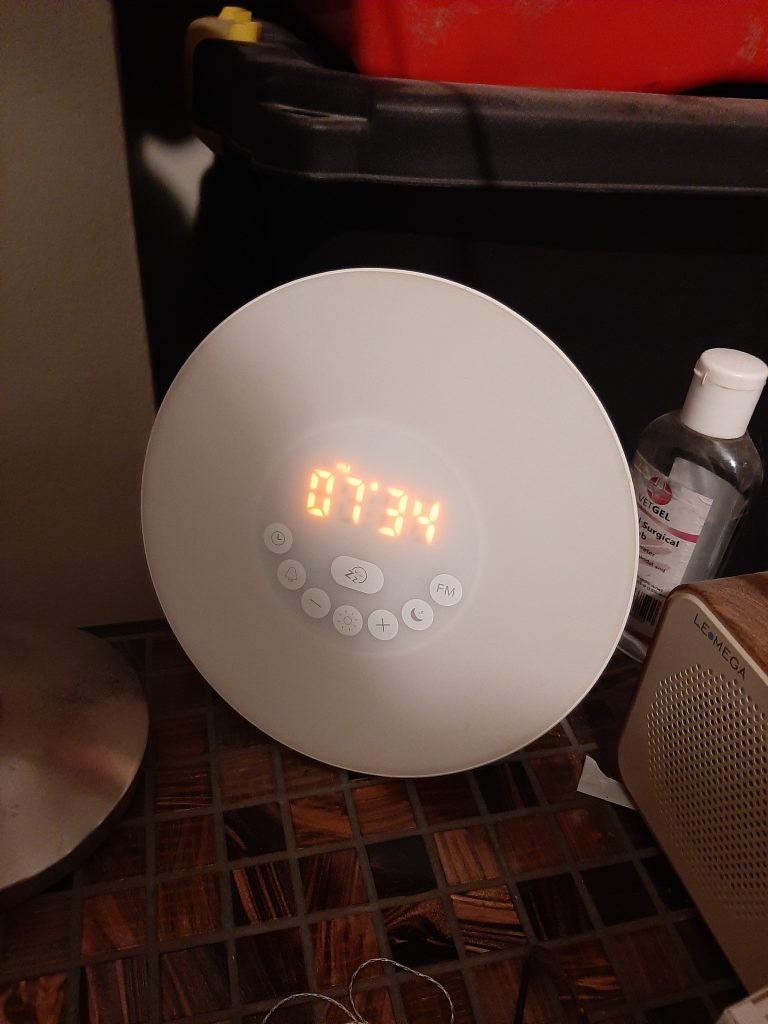
For the first of my winter survival tips I wanted to focus on something I have only recently tackled. I struggle with the lack of light in the winter. There is a lot of science to support that this is a real problem. Two winters ago, I bought this cheap SAD alarm clock to see if it would make a difference. I was shocked to find that it did.

This clock works by mimicking sunrise. My one also mimics sunset too but I rarely use that feature. It starts to light up gently around 30 minutes before my alarm is due to sound. The result for me is that I wake up not tired, usually just before the alarm! This is a total revelation for me. I was used to waking up tired and struggling to get out of bed. This is no longer the case if I use the clock.

So I highly recommend using a SAD alarm from the start of GMT to the start of British Summer Time.

Winter Survival Tip Two – Prep for the week/month ahead

I am very luck that on my current yard that we have adequate storage and so I can prep easily for the week/month ahead. I am currently on small bale hay which I have bought in bulk, I split this between Stormy’s stable and her pen. This way I am not walking to and from areas unnecessarily. When I was on the large hay, I would bag or make up hay nets for the week ahead every Sunday. Both of these save a huge amount of time during the week.

I also have swopped to bedding that suits being mucked out once a week. I know that is not always easy for people to do. As it very much depends on how clean/active your horse is. Stormy is filthy and very smelly. However she is relatively inactive. So we are on wood pellets. On straw she stank, I stank, it was awful. So the wood pellets are definitely a plus for us.

In addition to the bedding and hay, I also batch make up her dry feed. Usually for three days at a time. This again saves time and if I get caught at work, then she can still be fed by anyone that it there. I try to buy her feed once a month too to save time.

Winter Survival Tip Three – The Head Torch

On the theme of light, I also would never be without a head torch now. Click on this link to see the head torch I bought. It’s over a year old and still going strong. I keep the charging cable in my car so I can always have light when at the yard.

I find that even if you do have good light on the yard, a head torch will help you not miss cuts etc. Also see locks better or fastenings on rugs. At this time of year, unless it’s the weekend I actually operate purely in the dark so this really helps.

If you are leading to and from fields, teaching your horse to let you wear the head torch is invaluable. I have a long walk to and from my field, it’s lethal without a torch. Not all horses take to head torches so it really important to assess before you attempt to handle your horse with one on. Nickel was a total nightmare with a head torch. Stormy couldn’t care less.

Winter Survival Tip Four – Invest in Ski Wear

A number of years ago I suffered from chilblains on my thighs. At the time, the GP I saw did not recognise it as chilblains as she was not used to seeing a horse rider. In Newmarket, the doctors spot it straight away! It has left me with permanent scarring and I had to find the solution to my numerous painful flair ups.

The consultant that saw me at the skin hospital that I was referred to said that ski wear was best. So I started to look for affordable ski wear. For the most part, I now use TK Maxx to source decent ski coats and ski pants. Ski pants are a godsend, they go over the top of breeches, you can even ride in them if you don’t mind wearing them out quicker. They also tend to be showerproof.

Thankfully, things have moved on a lot since my first few proper winters working with horses. I use cheap base layers under my jumpers and coats for non bulky warmth. These are a matter of taste so find what is best for you and buy loads of them!

Head, Feet and Hands

Next up is extremities, good socks, gloves and headwear is also key. I prefer long socks but when it’s very cold with pop shorter fluffy socks over the top. Gloves have illuded me, I am not a glove sort of person. In general, I buy the cheap fleece gloves from Tesco and cheap builders gloves in bulk so I always have a pair of dry/waterproof gloves to hand.

Finally hats – I love a beanie hat, I have one that is over 15 years old, it’s famous in the stud world. I haven’t found one as good since and it was given to me as a promotional freebie so I can’t even source another. I personally don’t get on with head bands but that is because I have an odd head shape and weird hair! Again trial and error but a decent hat and a neck sock will help save you face from windrash.

I don’t believe that you need to buy expensive horse brands and that is why I probably won’t ever get sponsored by any of them. In general you can buy much better quality in other areas. For example – coats, these used to be properly waterproof but no longer. My last Ariat winter coat was only described as ‘shower proof’ on its label despite being advertised for winter wear. For waterproof abilities you need to look at sailing wear or old fashioned wax coats. So my best winter survival tips on clothing are buy ski wear, base layers and find what works for you on the bits that stick out.

Winter Survival Tip Five – Be kind to yourself

I always think that the 3 months after Christmas are the hardest for any horse owner. It’s easy to get wrapped up in being worried that your horse is not getting enough time outside; you are not riding enough; you are not making progress. However this really does not matter. If you are getting tired, it’s ok to pop your horse in their turnout all the time so you don’t have to change rugs. It is fine to not ride one night if it is pouring with rain and you are feeling bad as you haven’t done anything all week.

As horse owners, we can focus solely on our horse’s happiness. It’s ok to have a break. If you have the chance, get someone to do one night so you can just go straight home and relax. I have been lucky with my fellow liveries, sometimes we buddy up to help each other out. This can make all the difference for surviving winter.

I like to occasionally pamper myself, have a nice bath and pop on a face pack. It’s nice to not feel like a total slave all the time! I worked with horses from age 13 to 35. I do not feel any guilt now for taking time for me! Also your horse will thank you for it. A happy owner is a happy horse.

What are your Winter Survival Tips?

So there are my top five winter survival tips, what are yours? To be honest I could have done a much bigger list. However I want to see what you all recommend as well. Let’s help each other. Either comment on here or the post link on my socials.

My SAD Alarm Clock