Feeding Horses in Winter: Better Choices That Don’t Cost the Earth

I hope you have been enjoying this series on coping with the pressure of the winter for horse owner. This series is reflective of how I want the website to develop. Helping provide good quality, science backed advice that does work. Owning horses is not cheap but you can make better choices that don’t cost you the earth. If you missed my free check list you can get it here –

Feeding horses in winter is an area that you can do well to pay extra attention to. Whether you’ve got a good doer or a skinny minnie, then this blog is here to help you navigate the winter months more effectively.

I’m going to concentrate on three main areas:

  • Type of feed needed
  • Bulking out your feed effectively
  • Controlling the cost of winter feed

Start with the horse, not the bucket

Feeding horses is both a science and an art. The best place to start is to look at the horse, rugless. To help you can take a photo from both sides, front and back. Keep these and compare them monthly or so.
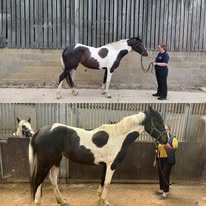
There are a number of very good source of body scoring that you can use to assess your horse’s body condition without weighing them. The British Horse Society has a really good resource on doing this – you can find it HERE. I’d say body scoring is the most reliable unless you have access to a weighbridge on site.

What Feed you will need

Forage is the base of the winter feeding and our biggest cost, so it is particularly important to have a good grip on.

Good doers are a nightmare in summer but a godsend in winter. If your horse is holding their condition well on hay and a heavily chaff based feed alone, then stick to that. Adding in a concentrate feed will only cost you money and give you a problem in the spring.

Conversely if your horse is on the lighter side, then concentrate on checking everything is good with them healthwise first – are their teeth checked and is there a worm issue? Before reaching for that bag of conditioning mix.

For both types, there are plenty of forage based options for either type. Look for low sugar/starch options like chopped straw products for the good doers. For the skinny minnies, look at chaffs with high oil and protein additions.

I went through this live, and you can watch it back here.

How to bulk out your feed effectively

fff This is the practical section people share. Cover chop, soaked fibre feeds and unmolassed beet, safe soaking times and amounts, and how to bulk out a small ration to keep a greedy horse occupied. If you use slow-feed nets, mention them as a way to stretch forage. Keep the scientific “why” short, such as how fibre keeps the gut working and slows eating.

Controlling costs

By nature, we are often a bit guilty of being ‘feeders’ but in this current climate it is vital to savvy with your feeding routine. Start to weigh your feed, weigh your hay nets or the portion of hay or haylage that you are putting out/in your stable. This will enable you to know how much you are using and how this correlates with what your horse actually needs. It also will enable you to work out how much it is costing you.

Along as being feeders, it is easy to try to be blind to just how much you are spending on your horse. There are some cheap wins that will help you save all year round, not just this winter!

  • Buy forage well ahead of needing it.
  • Buy in bulk, while this might be a bit scary, if you have the space then it will save you a lot.
  • Share loads with friends.
  • Ensure your feed storage is dry and vermin free to avoid wastage.
  • Feed by weight, not by scoop – this will save you far more money than you will realise.
  • Drop supplements that are not working or are doubled up.

In addition to cheap wins, there are also false economies to avoid –

  • Cheap feed does not always equal good food and you can end up needing to feed more and then end up living in a false economy. That said, do your research, most of the big feed companies have a value line that they sell as own brand feed in feed stores like Mole Valley Stores.
  • Feeding hay on the ground in the field – this will trash your grazing and the horses only eat a little before wasting it.

The Adventures in Black and White Feed Calculator

I’ve designed a winter feed calculator to take the guess work out of feeding. This great spreadsheet will work out how much your horse needs on a daily basis and will even give you the cost so you can budget for winter.

← Click image to go to shop

Wrapping it all up

This is the last in this current series, I hope you have enjoyed it and do watch the full Live. You can catch up either on Facebook or on YouTube.

Remember to pick the problems you can control, one from the three areas – one thing that will make it easier on the yard, one thing that will make winter more pleasant for your horse and one thing that will help you. Then you can build from there!

Want more help? Winter Help includes tailored advice on your horse, your land and your routine, a video call of up to an hour each month, and WhatsApp support with replies within 48 hours (£45, or £35 with a First Winter Chat discount). Whole Winter runs from 1st November or 1st December for 3 months (£120).

Your enquiry could not be saved. Please try again.
Thanks, your enquiry has been sent. I’ll reply within 2 working days, and I’ve emailed you a confirmation. If you can’t see it, check your junk folder. If your horse is ill or injured, please call your vet first.

Help Form

Tell me a little about you and your horse and I’ll come back to you within 2 working days.

We work with Brevo to collect your data and send you our communications. As part of this, Brevo acts under our responsibility and our instructions — we remain responsible for how your data is used for this purpose. Brevo may also, on its own side, use some of this data to help keep the platform secure (for example, to spot attempted fraud or hacking) — to find out more about this part, see Brevo's Privacy Policy.

My advice comes from my experience and equine science qualifications, and it doesn’t replace your vet. For any health concern or emergency, call them first.
The Great Winter Mane Mystery: It’s Not Friction, It’s Follicles

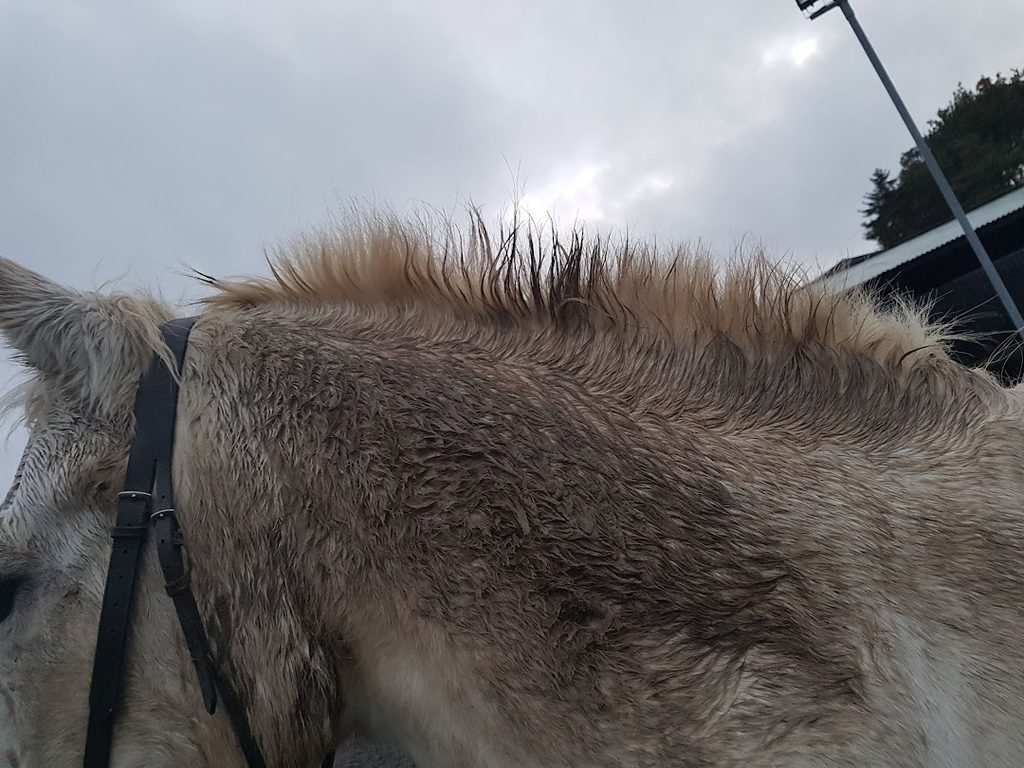
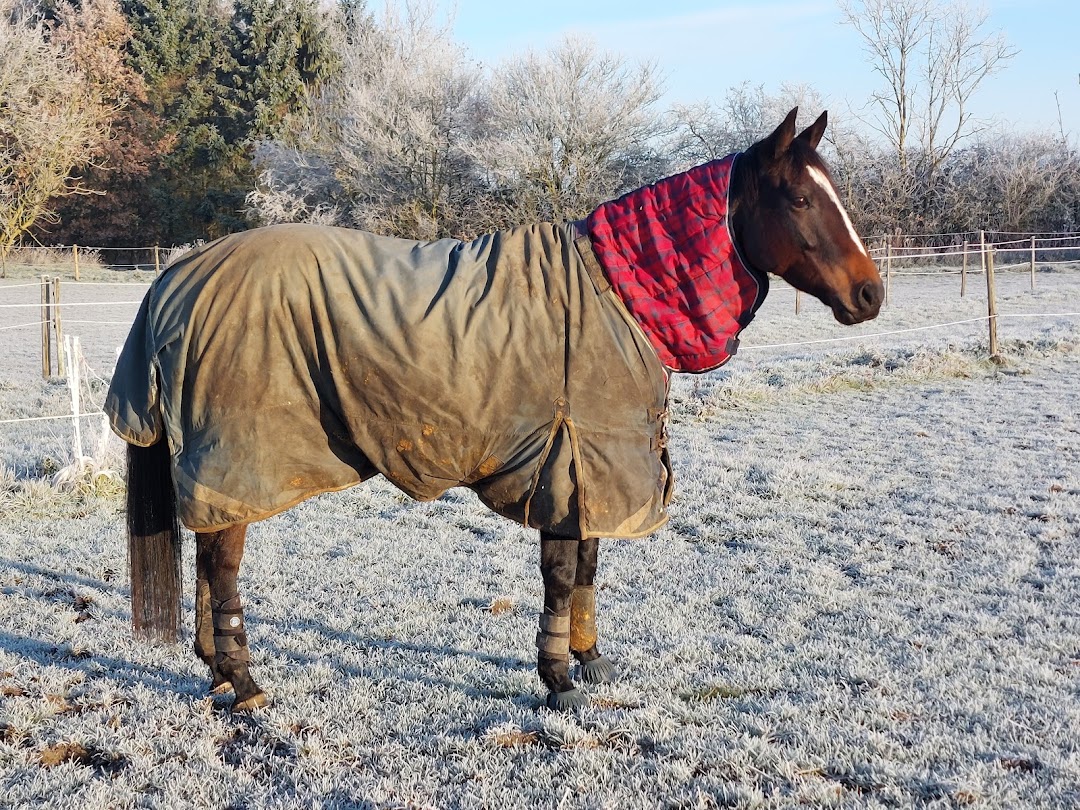
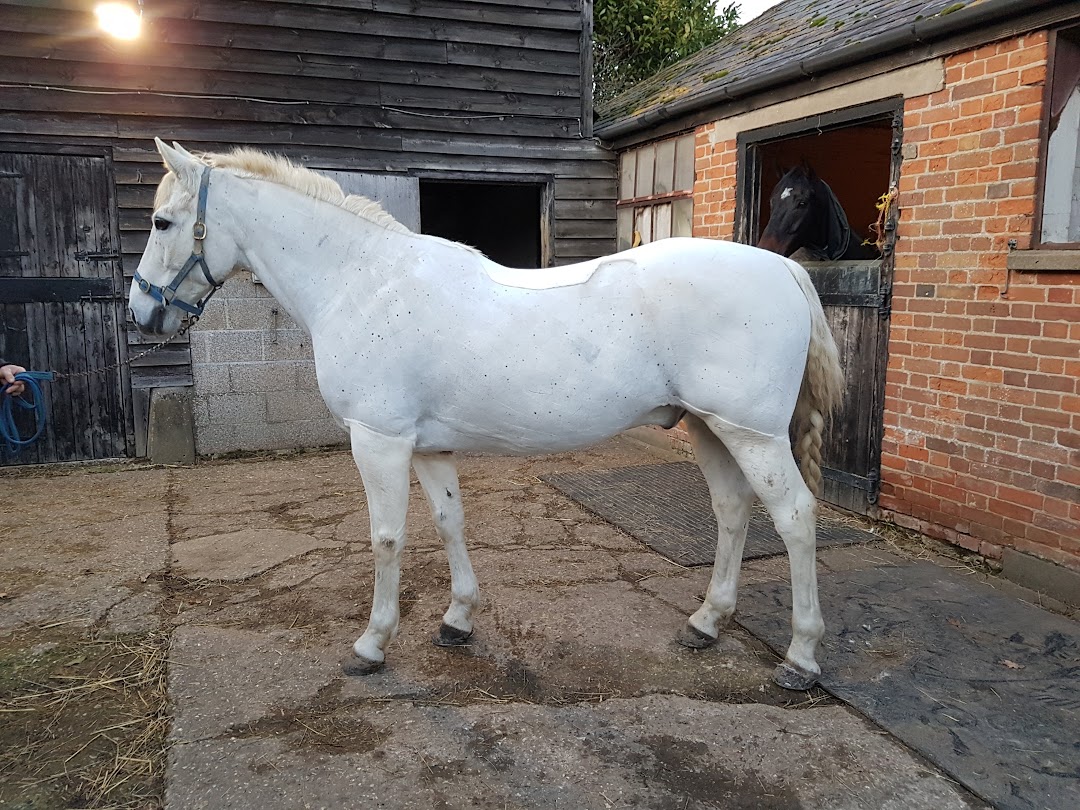
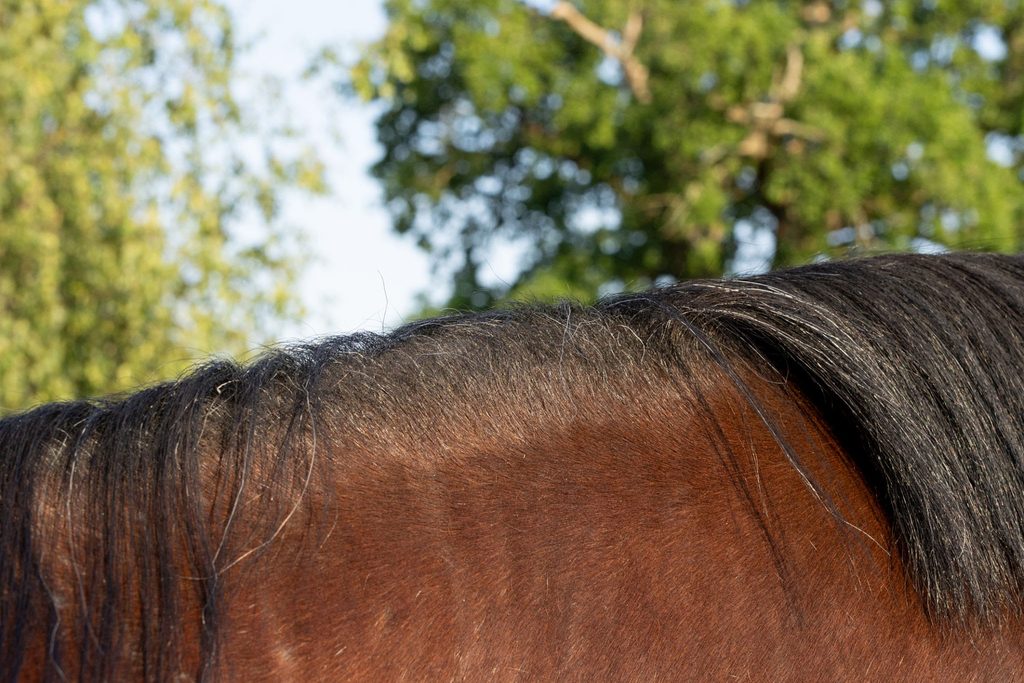
Along with rugging season, comes the yearly struggle. You go out to catch your horse, peel back their cozy full-neck turn-out rug, and there it is: half a mane. A patchy, scrubby strip along the crest that looks like it’s had an aggressive encounter with a pair of kitchen scissors.

The dreaded winter mane loss. Source: Piaffe Photography / Getty Images

If you’re planning to head out to a show or plait up for a clinic, it is a right pain in the bum.

For years, the standard yard wisdom has blamed one thing: friction. We spray silk conditioning sprays by the bottle, line our necks with satin, buy expensive bibs, and blame heavy canvas seams for “rubbing” the hair away.

I can remember a time. Before full-neck rugs became the default standard for every horse set loose in a muddy paddock, horses regularly spent all winter in standard cut rugs. And what did they have? Lovely, full, thick manes all year round.

So why are we suddenly facing a epidemic of half-manes every time temperatures drop?

I tried every trick in the book to stop the dreaded “mane rub.” But after trying different lining fabrics, seam placements, and anti-friction sprays to no avail, I stepped back, put my equine science hat on, and looked at the actual mechanism of what was happening. Nickel was the one that taught me that the mane wasn’t being rubbed out. It was falling out.

Here is the science of what’s actually going on under those heavy neck covers and the simple management tweak that solves it, even if you own a mud-obsessed grey like I did.

The Science: Thermal Stress and Micro-Inflammation

To understand why hair drops out, we have to look at how hair follicles function. Hair growth happens in cycles:

  1. Anagen: The active growth phase.
  2. Catagen: The transitional phase where growth stops.
  3. Telogen: The resting phase where the hair stays anchored until pushed out by new growth (or shed due to stress).

Hair follicles are surprisingly delicate biological structures, and they are acutely sensitive to heat, sweat build-up, and lack of oxygen.

1. Thermal Inconsistency and Follicle Shock

Horses are thermoregulation powerhouses. The neck contains major blood vessels (like the jugular vein and carotid artery) and large muscle groups. When we wrap the neck in heavy, insulated rug extensions, especially when the horse is stabled or during mild winter weather, the skin temperature beneath that neck cover spikes dramatically.

When hair follicles are subjected to constant, localized overheating, it triggers localized cellular stress. The body responds to this thermal stress by prematurely pushing hair follicles out of the active growth (Anagen) phase directly into the resting/shedding (Telogen) phase, a process similar to heat-induced telogen effluvium. The hair shaft simply releases from the root and drops out.

2. Micro-Sweat and Folliculitis

Even if your horse doesn’t feel visibly soaked with sweat under their rug, micro-sweating happens continuously under non-breathable or overly heavy neck covers. Sweat contains salts, skin oils (sebum), and moisture.

Trapped under a rug neck in a warm, dark environment, this mixture creates a breeding ground for bacteria and yeast, leading to mild folliculitis (inflammation of the hair follicle). The skin swells slightly around the root, weakening the anchor of the hair shaft. You don’t get a full-blown fungal infection or scabs, just hair that falls out at the slightest touch.

The Myth of the “Rug Rub”

When hair falls out at the root due to heat stress, friction finishes the job. The movement of the neck against the rug simply sweeps away the hair shafts that have already detached from their inflamed, overheated roots.

That’s why lining a heavy, hot neck rug with satin rarely works: you’re addressing the friction, but you’re ignoring the micro-climate underneath that’s cooking the hair roots in the first place!

The Solution: Keeping the Neck Cool (Without Ruining Your Grooming Schedule)

Once you realize heat is the enemy of the mane, the obvious fix is simple: stop using neck rugs.

However, theory meets reality in the stable yard. If you have a grey horse who regards a fresh patch of wet clay as their personal luxury spa, going entirely neckless in December simply isn’t an option unless you want to spend two hours scrubbing stains before every ride.

I had exactly that challenge: a mud-loving grey and a strong desire to keep a mane long enough to actually plait. Here is the exact routine that solved the problem for good:

1. Switch to Detachable Necks Only

Fixed-neck rugs force your horse into a single thermal regime. Invest in rugs with detachable neck covers so you can adapt to the environment rather than keeping the neck wrapped 24/7.

2. The Turnout Compromise: Lightweight Necks Only

When turning out, use the lightweight neck attachment at all times, regardless of how heavy the main body rug is. The lightweight neck acts purely as a shell—it keeps the mud, clay, and rain off the neck and mane without trapping intense heat against the crest.

3. The Golden Rule: Neck Off in the Stable

The moment your horse comes inside, the neck cover comes off.

Stables are sheltered micro-climates. The ambient air is still, and your horse’s body heat stays closer to them. Leaving neck covers on indoors keeps the crest perpetually warm and humid. By stripping the neck attachment off in the stable, you allow the skin to breathe, the temperature of the crest to drop, and the blood flow to the follicles to normalize.

The Takeaway: In Black and White

Traditional MindsetThe Science-Backed Approach
“The rug seam is physically rubbing the hair off.”The hair follicle is shedding due to overheating and micro-inflammation.
Fix: Add heavier satin linings or tight Lycra hoods.Fix: Reduce thermal trapping along the neck.
Result: Traps even more heat; hair continues to drop out.Result: Follicles stay cool, healthy, and securely anchored.

If you’re currently staring at a patchy crest and wondering how you can stop it, take a look at your rugging routine. Keep the neck dry in the field with a lightweight cover, let the neck breathe the second they step into the barn, and let science save your horse’s mane this winter.

Ditch the Thermometer: The Science of Rugging and Why Light (Not Cold) Controls the Coat

If you walk onto any livery yard in late September, you will inevitably hear the same ritual debate.

“It dropped to 8 degrees last night, so I put him in a 200g medium-weight.”

“I’m clipping early because his winter coat is coming in fast, it must be because of this chilly autumn rain!”

It is one of the most enduring myths in the equestrian world: the belief that dropping temperatures trigger hair growth, and heavy rugging keeps a coat thin.

Having spent over a decade working on Thoroughbred studs in Newmarket, foaling down hundreds of mares and preparing stock for elite sales, I’ve seen firsthand how high-level equine physiology actually works. When you need a mare cycling in February or a yearling showing a summer-slick coat in the dead of winter, you don’t reach for another turnout rug. You reach for the light switch.

Let’s strip away the yard folklore and look at the science in black and white.

The Big Myth: Cold Weather vs. Photoperiod

Your horse does not grow a winter coat because their skin feels a chill. Hair growth is governed almost entirely by photoperiod, the length of daylight in a 24-hour cycle.

Daylight regulates melatonin and hormonal cascades. Source: VectorMine / Getty Images

Here is what is actually happening inside your horse’s body as autumn approaches:

  1. Light Enters the Eye: Receptors in the horse’s retina detect decreasing hours of daylight as the days shorten after the summer solstice.
  2. The Pineal Gland Responds: This signal is transmitted to the pineal gland in the brain. Less light means the pineal gland increases its production of melatonin (the “darkness hormone”).
  3. The Pituitary Cascade: High levels of melatonin suppress the hypothalamus and pituitary gland, altering the release of key hormones like prolactin, the primary hormone responsible for coat shedding and hair follicle activation.
  4. Follicle Shift: Lower prolactin levels signal the hair follicles to shift into their growth phase (anagen), producing the thick, dense undercoat we recognize as winter hair.

Rugging a horse in five layers when the temperature drops will keep their body warm, but it will not stop the hormonal cascade triggered by their eyes. If light levels are dropping, the coat is coming.

What Breeding Studs Learned Decades Ago

If you want proof that light trumps temperature, look at the Thoroughbred breeding industry.

Equine reproduction is seasonal. Mares are long-day seasonal polyestrous breeders, meaning they naturally go into anoestrus (a reproductive shutdown) during the short, dark days of winter. In the wild, this ensures foals are born in warm spring weather when grass is lush.

However, in the racing world, every Thoroughbred officially turns a year older on January 1st. To produce early-born foals that have a competitive edge at the sales and on the track, studs need mares to wake up from anoestrus and start cycling by February.

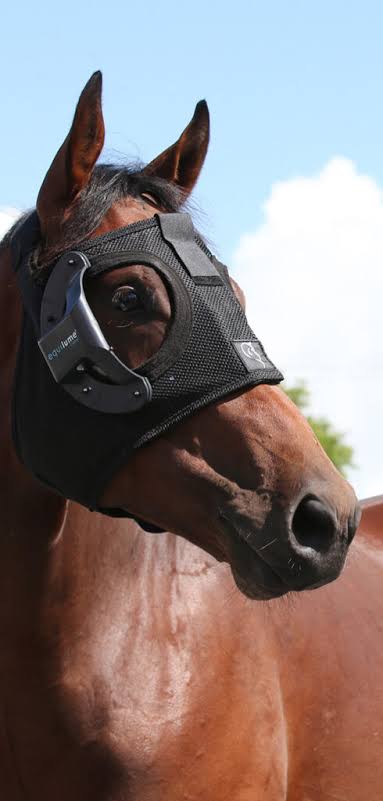
How do we break nature’s seasonal clock? Artificial lighting regimes either with stable lights or a system like EquiLume.

Light masks extend daily photoperiod. Source: Equilume

The Protocol: How to Trick the Pituitary Gland

By extending daily light exposure to 16 hours, we suppress melatonin production, tricking the pituitary gland into believing it is June.

The result? The mare’s hormonal system fires up, ovaries wake up, and as an added biological byproduct, the winter coat sheds out to reveal a shiny, short summer coat, even if it is -2°C outside in Newmarket!

If you want to use photoperiod science to manage your own horse’s coat condition over winter, here is the exact protocol used in elite barns:

1. The Light Intensity (Wattage)

A dim 40W bulb in the corner of a barn won’t cut it. The light must be strong enough at the horse’s eye level to register as daylight.

  • Target light intensity: 100 to 150 lux at eye level.
  • Practical rule of thumb: If you stand in the stable and cannot easily read a newspaper in every corner, it is not bright enough.
  • Standard setups usually require a 100W incandescent bulb or a bright, high-lumens LED fixture mounted safely above the stable.

2. The Daily Schedule (16 Hours Bright / 8 Hours Dark)

Timing is critical. Horses require a consistent duration of light to reset their internal circadian rhythm.

  • Target total photoperiod: 16 hours of continuous light per day.
  • The Routine: Set timers so lights turn on before dawn (e.g., 6:00 AM) and stay on through the evening until 10:00 PM.
  • Crucial Rule: Do not leave lights on 24 hours a day. The pineal gland needs 8 hours of complete darkness to maintain normal neurological and biological function.

3. Start Early

It takes approximately 60 to 70 days of continuous light therapy for the hormonal cascade to shift coat condition and reproductive cycles. If you wait until November when your horse looks like a woolly mammoth, you’ve missed the window. Broodmare managers typically start light therapy on December 1st to bring mares into heat by early February.

So, Why Do We Rug at All?

If rugs don’t stop hair growth, why do we use them?

Rugging isn’t about stopping hair growth, it’s about thermoregulation and energy management:

  • Energy Conservation: A horse uses significant dietary energy (calories) to maintain their core body temperature (around 38°C). Rugging prevents them from burning off condition just to stay warm.
  • Comfort for Clipped Horses: When we clip a horse to prevent excessive sweating during winter ridden work, we remove their natural insulation. A rug replaces that barrier.
  • Grease and Weather Protection: Rugs shield the skin from rain scald, mud, and wind-chill.

Rugging is a tool for thermal comfort, but light controls the hair.

The Bottom Line

Next time someone tells you to put a heavier rug on to stop your horse growing a winter coat, you can give them the facts. See last week’s blog on what you really need as a horse owner rug wise for winter.

Rugs keep horses warm, but their brain reads the daylight hours. If you want a shiny, short coat over winter without over-clipping or piling on six layers of canvas, put away the heavy turnouts and install a timer on your stable lights. Science wins over yard myth every single time.