

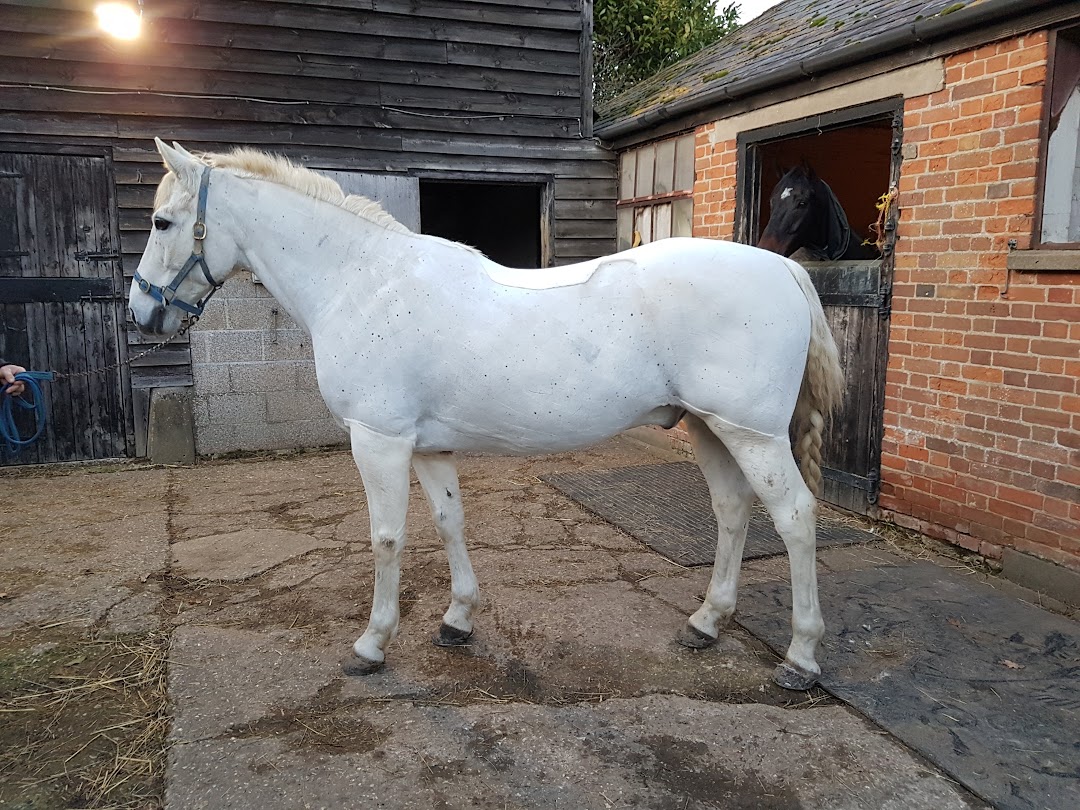
Along with rugging season, comes the yearly struggle. You go out to catch your horse, peel back their cozy full-neck turn-out rug, and there it is: half a mane. A patchy, scrubby strip along the crest that looks like it’s had an aggressive encounter with a pair of kitchen scissors.
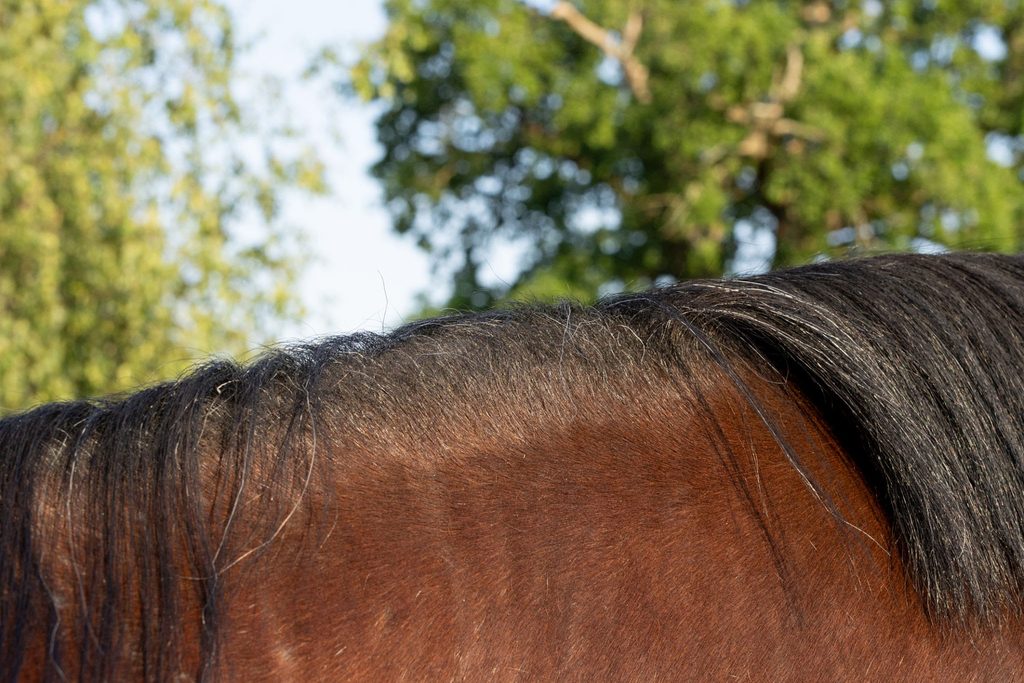
If you’re planning to head out to a show or plait up for a clinic, it is a right pain in the bum.
For years, the standard yard wisdom has blamed one thing: friction. We spray silk conditioning sprays by the bottle, line our necks with satin, buy expensive bibs, and blame heavy canvas seams for “rubbing” the hair away.
I can remember a time. Before full-neck rugs became the default standard for every horse set loose in a muddy paddock, horses regularly spent all winter in standard cut rugs. And what did they have? Lovely, full, thick manes all year round.
So why are we suddenly facing a epidemic of half-manes every time temperatures drop?
I tried every trick in the book to stop the dreaded “mane rub.” But after trying different lining fabrics, seam placements, and anti-friction sprays to no avail, I stepped back, put my equine science hat on, and looked at the actual mechanism of what was happening. Nickel was the one that taught me that the mane wasn’t being rubbed out. It was falling out.
Here is the science of what’s actually going on under those heavy neck covers and the simple management tweak that solves it, even if you own a mud-obsessed grey like I did.
The Science: Thermal Stress and Micro-Inflammation
To understand why hair drops out, we have to look at how hair follicles function. Hair growth happens in cycles:
- Anagen: The active growth phase.
- Catagen: The transitional phase where growth stops.
- Telogen: The resting phase where the hair stays anchored until pushed out by new growth (or shed due to stress).
Hair follicles are surprisingly delicate biological structures, and they are acutely sensitive to heat, sweat build-up, and lack of oxygen.
1. Thermal Inconsistency and Follicle Shock
Horses are thermoregulation powerhouses. The neck contains major blood vessels (like the jugular vein and carotid artery) and large muscle groups. When we wrap the neck in heavy, insulated rug extensions, especially when the horse is stabled or during mild winter weather, the skin temperature beneath that neck cover spikes dramatically.
When hair follicles are subjected to constant, localized overheating, it triggers localized cellular stress. The body responds to this thermal stress by prematurely pushing hair follicles out of the active growth (Anagen) phase directly into the resting/shedding (Telogen) phase, a process similar to heat-induced telogen effluvium. The hair shaft simply releases from the root and drops out.
2. Micro-Sweat and Folliculitis
Even if your horse doesn’t feel visibly soaked with sweat under their rug, micro-sweating happens continuously under non-breathable or overly heavy neck covers. Sweat contains salts, skin oils (sebum), and moisture.
Trapped under a rug neck in a warm, dark environment, this mixture creates a breeding ground for bacteria and yeast, leading to mild folliculitis (inflammation of the hair follicle). The skin swells slightly around the root, weakening the anchor of the hair shaft. You don’t get a full-blown fungal infection or scabs, just hair that falls out at the slightest touch.
The Myth of the “Rug Rub”
When hair falls out at the root due to heat stress, friction finishes the job. The movement of the neck against the rug simply sweeps away the hair shafts that have already detached from their inflamed, overheated roots.
That’s why lining a heavy, hot neck rug with satin rarely works: you’re addressing the friction, but you’re ignoring the micro-climate underneath that’s cooking the hair roots in the first place!
The Solution: Keeping the Neck Cool (Without Ruining Your Grooming Schedule)
Once you realize heat is the enemy of the mane, the obvious fix is simple: stop using neck rugs.
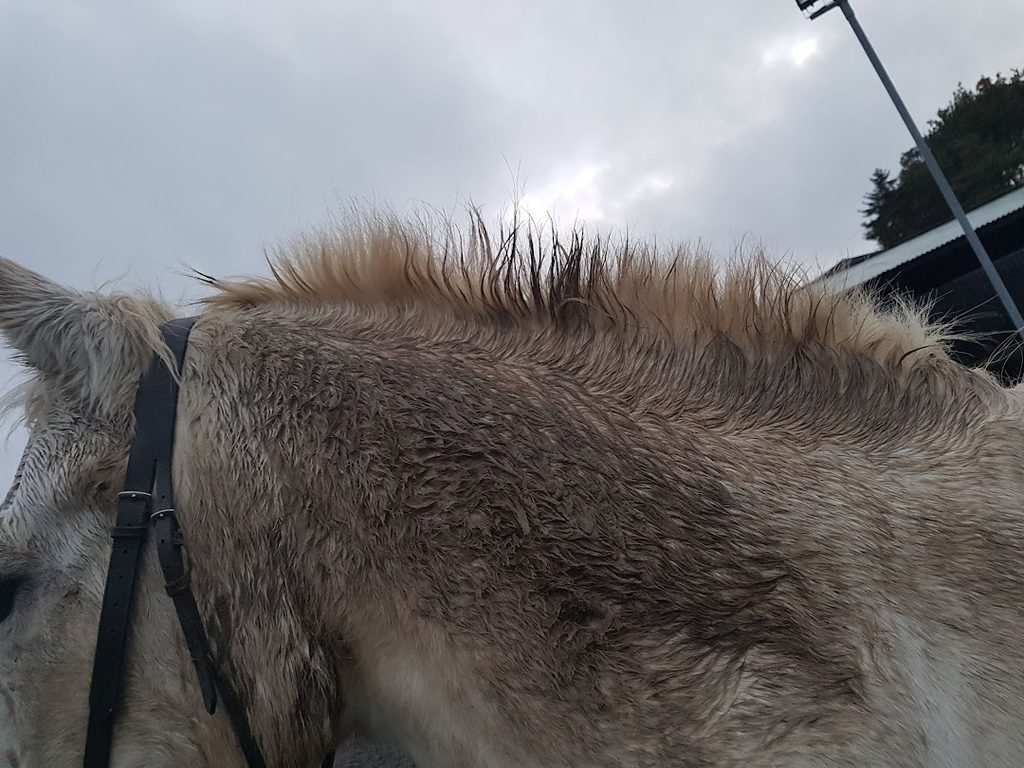
However, theory meets reality in the stable yard. If you have a grey horse who regards a fresh patch of wet clay as their personal luxury spa, going entirely neckless in December simply isn’t an option unless you want to spend two hours scrubbing stains before every ride.
I had exactly that challenge: a mud-loving grey and a strong desire to keep a mane long enough to actually plait. Here is the exact routine that solved the problem for good:
1. Switch to Detachable Necks Only
Fixed-neck rugs force your horse into a single thermal regime. Invest in rugs with detachable neck covers so you can adapt to the environment rather than keeping the neck wrapped 24/7.
2. The Turnout Compromise: Lightweight Necks Only
When turning out, use the lightweight neck attachment at all times, regardless of how heavy the main body rug is. The lightweight neck acts purely as a shell—it keeps the mud, clay, and rain off the neck and mane without trapping intense heat against the crest.
3. The Golden Rule: Neck Off in the Stable
The moment your horse comes inside, the neck cover comes off.
Stables are sheltered micro-climates. The ambient air is still, and your horse’s body heat stays closer to them. Leaving neck covers on indoors keeps the crest perpetually warm and humid. By stripping the neck attachment off in the stable, you allow the skin to breathe, the temperature of the crest to drop, and the blood flow to the follicles to normalize.
The Takeaway: In Black and White
| Traditional Mindset | The Science-Backed Approach |
| “The rug seam is physically rubbing the hair off.” | The hair follicle is shedding due to overheating and micro-inflammation. |
| Fix: Add heavier satin linings or tight Lycra hoods. | Fix: Reduce thermal trapping along the neck. |
| Result: Traps even more heat; hair continues to drop out. | Result: Follicles stay cool, healthy, and securely anchored. |
If you’re currently staring at a patchy crest and wondering how you can stop it, take a look at your rugging routine. Keep the neck dry in the field with a lightweight cover, let the neck breathe the second they step into the barn, and let science save your horse’s mane this winter.