The Lost Art of Heavy Wool: Why Modern Equine Tech Will Never Beat a Proper Newmarket Blanket

If you step into any modern tack shop or scroll through an online equine retailer, you’ll be bombarded with an overwhelming wall of neon ripstop nylon, multi-layered synthetic fill, and high-tech “wicking mesh.” We’ve been conditioned to believe that if a rug doesn’t have a dynamic waterproof rating, taped seams, and a detachable neck cover with high-tech buckles, it’s somehow failing our horses.

I’m all for science-backed management, my background in equine science means I love a good bit of technology, but when it comes to rugging, we’ve managed to overcomplicate the basics.

In our rush toward space-age synthetics, we’ve quietly sidelined some of the most versatile, hard-wearing, and performant tack room staples ever created. Top of that list? The original Newmarket blanket woven from genuine Witney Wool.

I don’t mean the acrylic, pseudo-fleece copycats sitting on the bargain rails. I mean the real deal: heavy, dense, tightly woven, traditional British wool.

Here is why true heavy wool still deserves a permanent spot in your tack room.

The Anatomy of Pure Witney Wool

To understand why a traditional Newmarket blanket performs so exceptionally well, you have to look at the raw material. Historical Witney wool blankets, traditionally crafted in Witney, Oxfordshire, were subjected to a rigorous “milling” and “raising” process. The raw wool fibers were pounded and woven so tightly together that they locked into a dense fabric, which was then brushed to create a thick, lofty nap.

When you hold a real Witney wool Newmarket blanket, the first thing you notice is the weight. It feels substantial. Unlike modern acrylic fleeces, which are effectively petroleum-based plastic knits, heavy wool operates through sheer natural thermodynamics.

Traditional Witney Wool Blanket

Dense Thermal Nap

Traps core body heat without trapping moisture.

Micro Crimp Structure

Creates natural moisture pathways allowing it to be breathable and dry.

1. Breathability: The Dynamic Moisture Regulator

The biggest flaw in modern synthetic stable rugs or fleece coolers is their binary nature. Synthetic fibers don’t absorb moisture; they rely on air movement to push steam outward. If your horse cools down rapidly under a heavy synthetic cooler, moisture gets trapped against the skin, resulting in a damp, chilled coat.

Pure wool behaves completely differently:

  • Hygroscopic Action: Wool fibers can absorb up to 30% of their own weight in moisture without feeling wet to the touch.
  • Self-Regulated Cooling: As a sweaty horse dries off after a session in the arena, the wool pulls the sweat away from the skin into the core of the fiber, releasing it slowly into the atmosphere as vapor.
  • Zero Chill Factor: Because the surface of the wool against the horse remains dry, cold air cannot pull heat off your horse’s skin.

You can toss a heavy Witney Newmarket blanket over a hot, steaming horse after a workout, pin it at the chest with a proper brass blanket pin, and walk away. When you check on them half an hour later, the outside of the blanket will feel damp, but the horse underneath will be bone-dry, warm, and comfortable. Synthetic fleeces simply can’t match that level of moisture management.

2. Natural Water-Resistance

We’ve been led to believe that “waterproof” must mean a laminated polyurethane coating. But ask anyone who spent their youth hunting or exercising racehorses on the downs in cold, miserable weather: heavy wool is remarkably weather-proof.

Raw wool contains natural lanolin, and when woven tightly into a dense cloth like a Newmarket blanket, it creates a hydrophobic barrier. Light rain, drizzle, and damp mist don’t penetrate the fabric; they bead up and sit on top of the lofty pile.

If you’re riding out in winter, wool doesn’t get soaked through and heavy in the way cheap cotton or un-proofed synthetic sheets do. It acts like a shield, insulating against the cold wind while keeping dampness at bay.
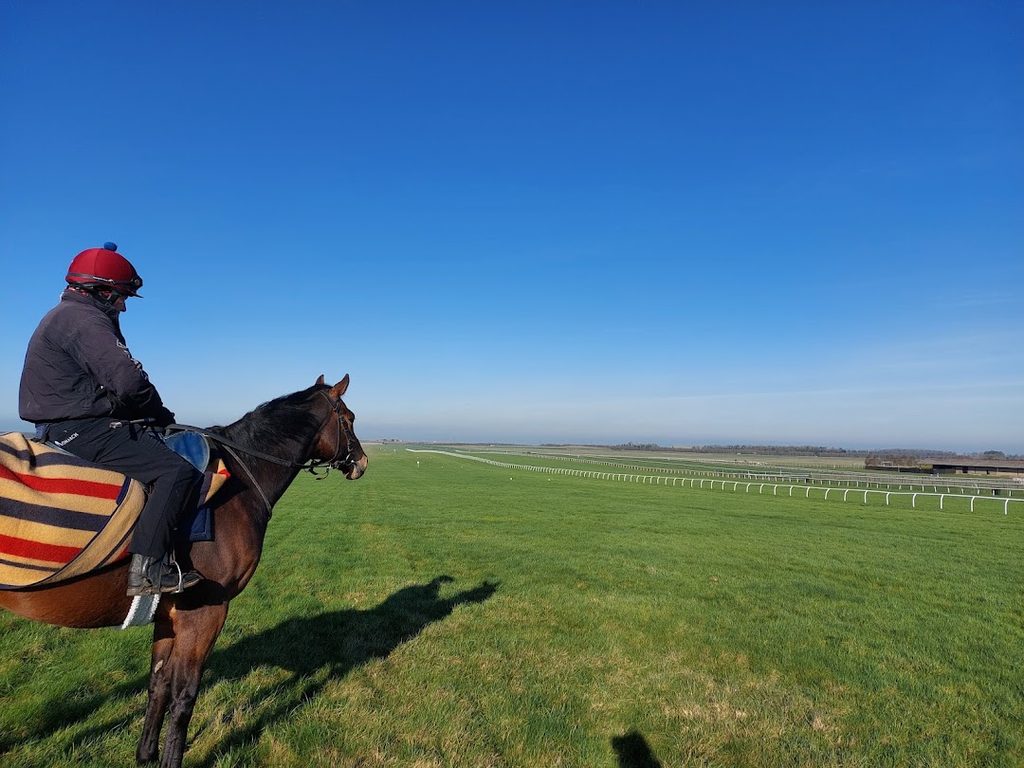
3. The Ultimate Exercise Sheet

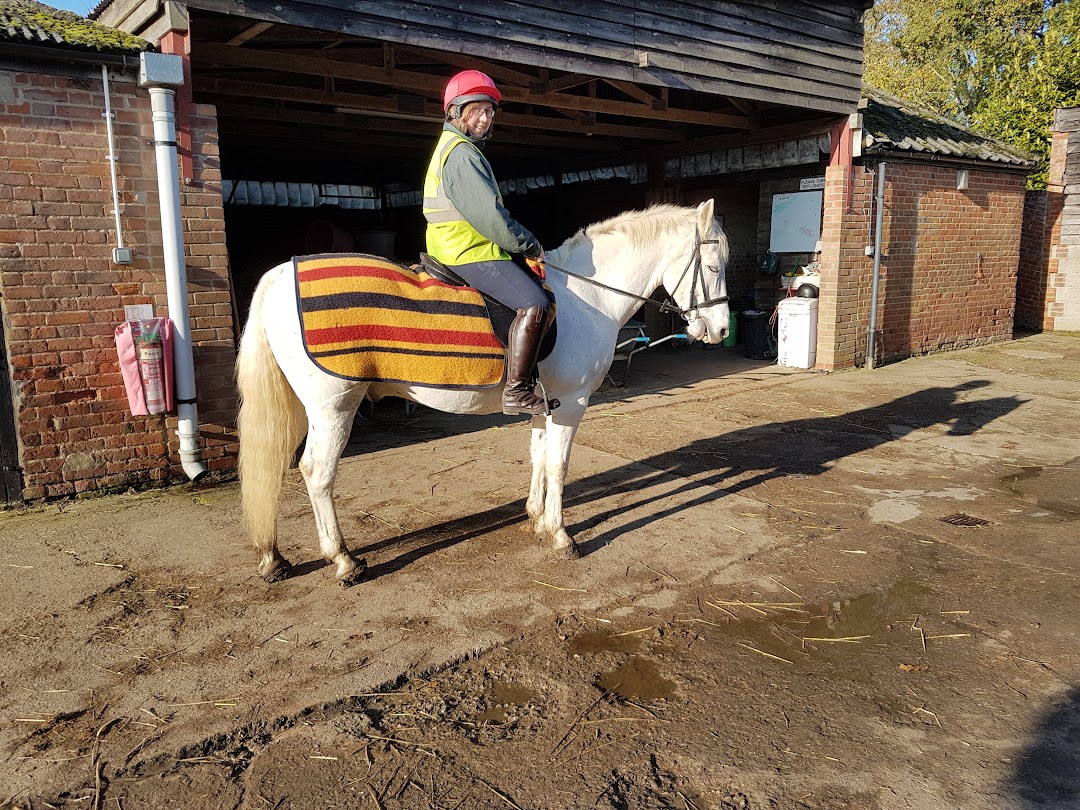
If there is one place where the Newmarket blanket truly outshines every modern alternative, it’s as an exercise sheet. I show this in my YouTube Tutorial on exercise sheets –

Folded neatly under the back of your saddle or wrapped securely around your legs on a freezing morning hack, a real wool exercise sheet is pure functional perfection:

  • It stays put: Wool has a natural friction against hair and leather. Unlike sleek nylon exercise sheets that slip, slide, and bunch up behind your leg, wool stays grounded.
  • It doesn’t flap: Because of its inherent weight, a heavy wool sheet drops naturally around the quarters. It won’t whip around in a gust of wind, a massive bonus if you’re riding a young, sharp, or sensitive horse!
  • It won’t create static: How many times have you pulled a modern fleece exercise sheet off your horse’s hindquarters only to hear a shower of static sparks that sends them leaping into the air? Wool is naturally anti-static.

Heavy Witney Wool vs. Modern Synthetics

Real Witney Wool

  • Holds 30 moisture without wetness
  • Heavy weight prevents flapping in the wind
  • Naturally anti-static
  • Last decades (heirloom quality)

Modern Synthetic (Acrylic/Fleece)

  • Traps surface dampness against coat
  • Lightweight; flaps in wind
  • Generates a lot of static
  • Degrades/pills after a few seasons

Hard-Wearing: An Heirloom in Your Tack Room

Let’s address the elephant in the yard: real Witney Wool Newmarket blankets are an investment. They aren’t cheap, and they aren’t throwaway kit.

But here’s the reality: cheap synthetic rugs are designed to be replaced every couple of seasons. The straps tear, the bindings fray, the waterproofing wears off, and the fleece turns into a pilled, hair-covered mess after three washes.

A genuine Witney Wool Newmarket blanket is practically indestructible.

  • It doesn’t melt if it accidentally brushes against a warm radiator.
  • It resists tearing when snagged on stable latches.
  • It repels hair far better than cheap knit fleeces.
  • A quick brush down with a stiff dandy brush once dry is usually all the maintenance it needs.

There are tack rooms across the country with yellow-and-black striped Newmarket blankets that have been in continuous daily use for 30 or 40 years. They get passed down from horse to horse, owner to owner. They are true heirloom tack. My own Witney blanket is 20 years old and still as bright as the day I bought it.

The Verdict

Modern equine tech absolutely has its place, I wouldn’t trade a lightweight, breathable, 0g turn-out for a soaked canvas rug on a torrential day in the field! But in our rush to synthetic everything, we shouldn’t abandon what plain, simple science has already perfected.

If you happen to come across an old, heavy, genuine Witney Wool Newmarket blanket, whether in the back of an old tack room or at a car boot sale. Don’t walk past it. Grab it, air it out, and pin it on your horse.

Your horse will stay warmer, dry faster, and look iconic in the process. Sometimes, the old ways really are the best ways.

Ditch the Thermometer: The Science of Rugging and Why Light (Not Cold) Controls the Coat

If you walk onto any livery yard in late September, you will inevitably hear the same ritual debate.

“It dropped to 8 degrees last night, so I put him in a 200g medium-weight.”

“I’m clipping early because his winter coat is coming in fast, it must be because of this chilly autumn rain!”

It is one of the most enduring myths in the equestrian world: the belief that dropping temperatures trigger hair growth, and heavy rugging keeps a coat thin.

Having spent over a decade working on Thoroughbred studs in Newmarket, foaling down hundreds of mares and preparing stock for elite sales, I’ve seen firsthand how high-level equine physiology actually works. When you need a mare cycling in February or a yearling showing a summer-slick coat in the dead of winter, you don’t reach for another turnout rug. You reach for the light switch.

Let’s strip away the yard folklore and look at the science in black and white.

The Big Myth: Cold Weather vs. Photoperiod

Your horse does not grow a winter coat because their skin feels a chill. Hair growth is governed almost entirely by photoperiod, the length of daylight in a 24-hour cycle.

Daylight regulates melatonin and hormonal cascades. Source: VectorMine / Getty Images

Here is what is actually happening inside your horse’s body as autumn approaches:

  1. Light Enters the Eye: Receptors in the horse’s retina detect decreasing hours of daylight as the days shorten after the summer solstice.
  2. The Pineal Gland Responds: This signal is transmitted to the pineal gland in the brain. Less light means the pineal gland increases its production of melatonin (the “darkness hormone”).
  3. The Pituitary Cascade: High levels of melatonin suppress the hypothalamus and pituitary gland, altering the release of key hormones like prolactin, the primary hormone responsible for coat shedding and hair follicle activation.
  4. Follicle Shift: Lower prolactin levels signal the hair follicles to shift into their growth phase (anagen), producing the thick, dense undercoat we recognize as winter hair.

Rugging a horse in five layers when the temperature drops will keep their body warm, but it will not stop the hormonal cascade triggered by their eyes. If light levels are dropping, the coat is coming.

What Breeding Studs Learned Decades Ago

If you want proof that light trumps temperature, look at the Thoroughbred breeding industry.

Equine reproduction is seasonal. Mares are long-day seasonal polyestrous breeders, meaning they naturally go into anoestrus (a reproductive shutdown) during the short, dark days of winter. In the wild, this ensures foals are born in warm spring weather when grass is lush.

However, in the racing world, every Thoroughbred officially turns a year older on January 1st. To produce early-born foals that have a competitive edge at the sales and on the track, studs need mares to wake up from anoestrus and start cycling by February.

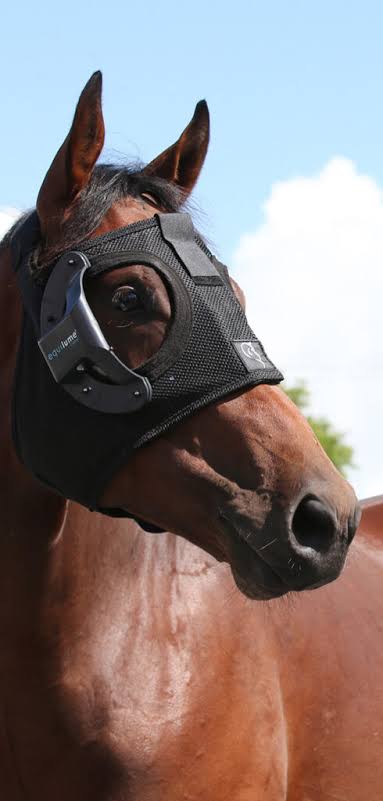
How do we break nature’s seasonal clock? Artificial lighting regimes either with stable lights or a system like EquiLume.

Light masks extend daily photoperiod. Source: Equilume

The Protocol: How to Trick the Pituitary Gland

By extending daily light exposure to 16 hours, we suppress melatonin production, tricking the pituitary gland into believing it is June.

The result? The mare’s hormonal system fires up, ovaries wake up, and as an added biological byproduct, the winter coat sheds out to reveal a shiny, short summer coat, even if it is -2°C outside in Newmarket!

If you want to use photoperiod science to manage your own horse’s coat condition over winter, here is the exact protocol used in elite barns:

1. The Light Intensity (Wattage)

A dim 40W bulb in the corner of a barn won’t cut it. The light must be strong enough at the horse’s eye level to register as daylight.

  • Target light intensity: 100 to 150 lux at eye level.
  • Practical rule of thumb: If you stand in the stable and cannot easily read a newspaper in every corner, it is not bright enough.
  • Standard setups usually require a 100W incandescent bulb or a bright, high-lumens LED fixture mounted safely above the stable.

2. The Daily Schedule (16 Hours Bright / 8 Hours Dark)

Timing is critical. Horses require a consistent duration of light to reset their internal circadian rhythm.

  • Target total photoperiod: 16 hours of continuous light per day.
  • The Routine: Set timers so lights turn on before dawn (e.g., 6:00 AM) and stay on through the evening until 10:00 PM.
  • Crucial Rule: Do not leave lights on 24 hours a day. The pineal gland needs 8 hours of complete darkness to maintain normal neurological and biological function.

3. Start Early

It takes approximately 60 to 70 days of continuous light therapy for the hormonal cascade to shift coat condition and reproductive cycles. If you wait until November when your horse looks like a woolly mammoth, you’ve missed the window. Broodmare managers typically start light therapy on December 1st to bring mares into heat by early February.

So, Why Do We Rug at All?

If rugs don’t stop hair growth, why do we use them?

Rugging isn’t about stopping hair growth, it’s about thermoregulation and energy management:

  • Energy Conservation: A horse uses significant dietary energy (calories) to maintain their core body temperature (around 38°C). Rugging prevents them from burning off condition just to stay warm.
  • Comfort for Clipped Horses: When we clip a horse to prevent excessive sweating during winter ridden work, we remove their natural insulation. A rug replaces that barrier.
  • Grease and Weather Protection: Rugs shield the skin from rain scald, mud, and wind-chill.

Rugging is a tool for thermal comfort, but light controls the hair.

The Bottom Line

Next time someone tells you to put a heavier rug on to stop your horse growing a winter coat, you can give them the facts. See last week’s blog on what you really need as a horse owner rug wise for winter.

Rugs keep horses warm, but their brain reads the daylight hours. If you want a shiny, short coat over winter without over-clipping or piling on six layers of canvas, put away the heavy turnouts and install a timer on your stable lights. Science wins over yard myth every single time.

The Great Rug Dilemma: Why ‘Less is More’ When Layering Up Your Horse

We are getting to the time of year where on every livery yard all over the UK, horse owners are asking – ‘which rug are you putting on tonight?’ You have the one that is glued to the weather apps, the one that remembers the Beast from the East and the one who is just bewildered at the amount of choice on what sort of rug to use.

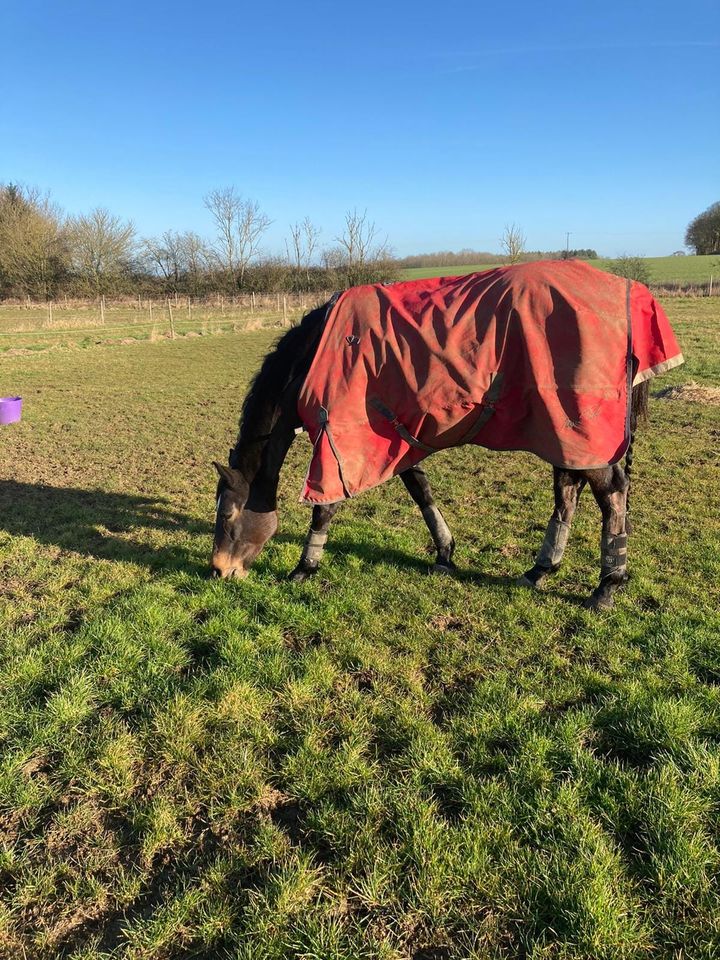
Walk onto almost any livery yard, open up a tack room, and you’ll likely find a staggering tower of rugs. There’s the 0g light turnout, the 50g lite-plus, the 100g middle-weight, the 150g, the 200g, the 300g heavy, the high-neck option, the detachable-hood option, the fleece, the waffle cooler, the exercise sheet, and enough under-rugs to start a small saddlery business.

It’s completely understandable! As horse owners, we want our horses to be happy, dry, and cozy. The moment the temperature dips a single degree or a cloud looms overhead, the urge to go out and buy “just one more rug” is overwhelmingly strong.

However, if my time with horses has taught me anything, it’s that simplicity often wins – for your wallet, your tack room space, and most importantly, for your horse’s natural thermoregulation.

When it comes to equines and wardrobe choices, less really is more.

The Reality of How Horses Stay Warm

Before talking about what rugs to buy, it helps to step back and look at how horses actually manage their own climate control.

Horses are surprisingly efficient self-heaters. Their digestive process (specifically the fermenting of fibre in the hindgut) works like an internal central heating system. On top of that, their coats naturally fluff up (piloerection) to trap warm air next to their skin.

When we throw an overly heavy rug onto a horse, we flatten that natural air layer. If we get the weight wrong and they overheat, they sweat. Sweat traps moisture against the skin, and once they stop moving, that trapped dampness actually makes them far colder than if they had been left with less filling in the first place!

So, how do we keep them comfortable without overcomplicating things? By stripping back the wardrobe to a few well-designed, versatile basics.

Starting from Scratch: The 2-Rug Foundation

If you are starting out with a new horse, trying to declutter your rug storage, or just want to adopt a more sensible approach to winter, you don’t need a mountain of nylon. In fact, you can start with just two good-quality rugs and build up only as you need to:

1. A Decent Lightweight Turnout (0g – 50g)

This is your ultimate year-round shield against the element. A good lightweight waterproof turnout isn’t really about warmth—it’s about protection from rain and wind.

  • Why it works: Rain-soaked fur loses its ability to trap warm air. By slipping a breathable, quality lightweight turnout over your horse on a wet, windy day, you keep their coat completely dry. Their internal heater can then do its job naturally without the rug overheating them.
  • Top tip: Invest in high-denier (1200D or higher) so it holds up against fence rubs, briars, and field-mate tugs. A durable, waterproof sheet is worth its weight in gold.
  • I personally recommend the Horseware Amigo , a great all round rug that won’t break the bank and you can layer under.

2. A Decent Medium Weight Stable Rug (approx. 200g)

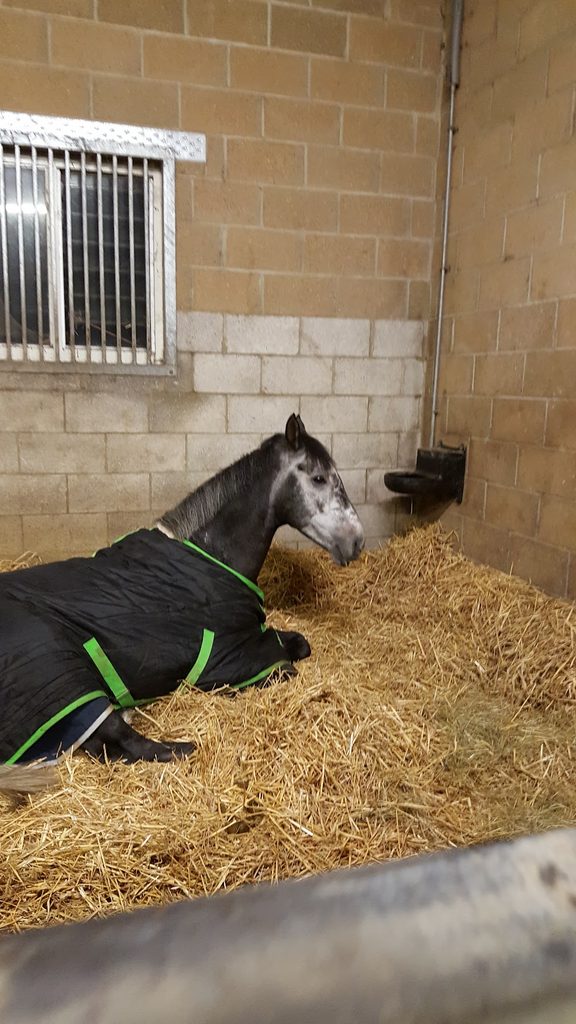
When the temperature drops properly overnight or your horse is clipped and coming inside out of the wind, a medium weight stable rug provides that cozy, breathable layer of warmth.

  • Why it works: Stable environments lack the natural wind, rain, and mud of the field, but stabled horses also can’t move around as freely to generate body heat. A classic 200g stable rug offers enough insulation to keep the chill off without making them sweat in their bedding.
  • Top tip: Look for good shoulder gussets and soft lining around the chest and wither area to prevent rubs during long winter nights in the box.
  • I personally recommend the Swish Stable Rug line, they fit well and are kind on the wallet or if you want a system that works with the Amigo, then the liner that will fit this rug.

How to Expand (Without Overwhelming Your Tack Room)

Once you have your core two rugs, you’ll start to get a feel for how your horse naturally handles the seasons. Do they run hot? Are they a poor keeper who drops weight easily? Are they fully clipped or natural?

Instead of buying ten separate rugs for every minor weather tweak, you can build flexibility into your basic setup using simple layering systems or detachable necks:

  • Add a simple fleece or cooler: Placing a breathable fleece underneath your lightweight turnout quickly turns it into a light-medium layer on chilly spring mornings. Fleeces are also great for drying off a sweaty horse after a ride or keeping dust off at a competition.
  • Consider a liner system: Many modern turnout brands offer detachable liner systems (e.g., 100g or 200g inserts) that clip directly into your main turnout sheet. This lets you turn your 0g sheet into a heavy turnout in seconds, saving money and rug-rack space. Horseware do a great line of liners that I really recommend.

Trust the Feel Test (Not the Weather App)

It’s easy to look at the weather forecast in the morning, feel a chill while sipping a hot mug of tea in the kitchen, and assume your horse needs another layer. But humans feel the cold much faster than horses do!

The easiest way to check if your minimalist rugging approach is working is simple: slide your hand under the rug just behind the shoulder.

  • If it feels comfortable and warm, they are spot on.
  • If it feels cold or chilly, they might need a light layer adding.
  • If it feels hot, clammy, or damp, they are over-rugged and need stripping back.

The Takeaway

Equine marketing makes it very easy to feel like you’re failing your horse if you don’t own every rug weight under the sun. But keeping things simple reduces stress, saves money, and actually supports your horse’s health far better in the long run.

Start with two decent, well-fitting, high-quality basics. A solid lightweight turnout and a reliable medium stable rug, and go from there. Your horse (and livery yard owner) will thank you for it!

How many rugs do you currently have tucked away in your tack room or garage at home? Are you a “less is more” minimalist or an accidental collector?